





What's Happening?
Actor Robin Shou, known for his role as Liu Kang in 'Mortal Kombat,' recently shared anecdotes about working with the late comedian Chris Farley on the set of the 1997 film 'Beverly Hills Ninja.' Shou, who played Gobei, Farley's foster brother in the movie,
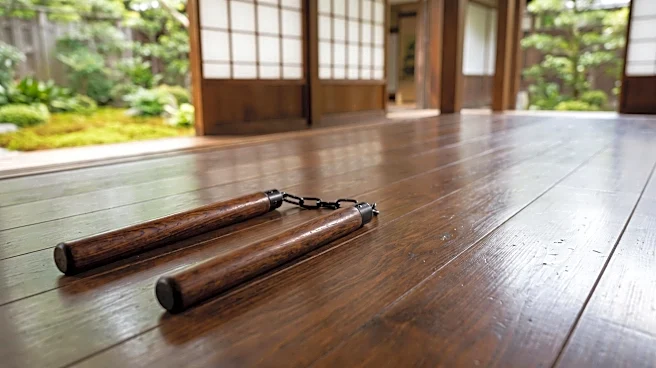
recounted Farley's humorous attempts to 'tongue' him during scenes, stating that Farley would often say, 'Oh, Robin, you’re so sexy. I just wanna tongue you.' These playful interactions, though awkward, are remembered fondly by Shou as some of the funniest moments from the production. Farley passed away in December 1997, just 11 months after the movie's release, making these behind-the-scenes stories a significant part of his legacy. Shou also highlighted Farley's dedication to the physical aspects of his role, noting that he trained Farley in various martial arts weapons, including nunchucks, three-sectional staff, and swords, to prepare him for the action sequences in the film. Despite its low critical approval rating, 'Beverly Hills Ninja' has gained a cult following over the years, with figures like Christian Bale expressing their admiration for Farley's performance.
Why It's Important?
This recollection offers a valuable glimpse into the working dynamics and personal interactions of a beloved comedic actor, Chris Farley, whose career was cut short. For fans and film historians, these personal accounts from co-stars like Robin Shou provide a more intimate understanding of Farley's on-set persona and his approach to comedy, which often blended physical humor with an endearing, sometimes mischievous, personality. Such stories contribute to the cultural memory of a performer who left a significant, albeit brief, mark on American comedy. Furthermore, the enduring popularity of 'Beverly Hills Ninja,' despite its initial critical reception, underscores how certain films can resonate with audiences over time, often due to the unique chemistry and performances of their cast members. The revelation of Shou's role in training Farley for the film also highlights the collaborative nature of filmmaking and the dedication actors put into their roles, even in comedic productions. This insight enriches the understanding of the film's production and the talents involved.
What's Next?
As 'Beverly Hills Ninja' approaches its 30th anniversary in January 2027, renewed interest in the film and its stars, particularly Chris Farley, is likely. Such anniversaries often lead to retrospectives, interviews with surviving cast and crew, and re-evaluations of the film's place in cinematic history. The continued streaming availability of the movie on platforms like Netflix ensures its accessibility to new generations of viewers, potentially solidifying its status as a cult classic. These discussions and renewed viewership could further cement Chris Farley's legacy as a comedic icon and bring more attention to the contributions of his co-stars, such as Robin Shou, who played a significant role in the film's unique blend of comedy and martial arts. Future interviews or documentaries about Farley's life and career may incorporate these types of behind-the-scenes anecdotes, offering a more comprehensive portrait of the comedian.
Beyond the Headlines
The enduring appeal of 'Beverly Hills Ninja' and the fond memories shared by its cast members speak to the power of comedic performances to transcend initial critical reviews and create lasting cultural impact. Chris Farley's ability to connect with audiences, even in films that were not universally acclaimed, highlights his unique talent and charisma. The film's journey from a critically panned movie to a beloved classic also illustrates how audience perception and cultural appreciation can evolve over time, often valuing entertainment and comedic value over critical consensus. Moreover, the story subtly touches upon the often-unseen efforts of actors like Robin Shou, whose martial arts expertise contributed significantly to the film's action-comedy dynamic, showcasing the diverse skill sets that go into creating memorable cinematic experiences. This narrative reinforces the idea that a film's true legacy is often shaped by its audience and the personal connections forged by its performers.