






What's Happening?
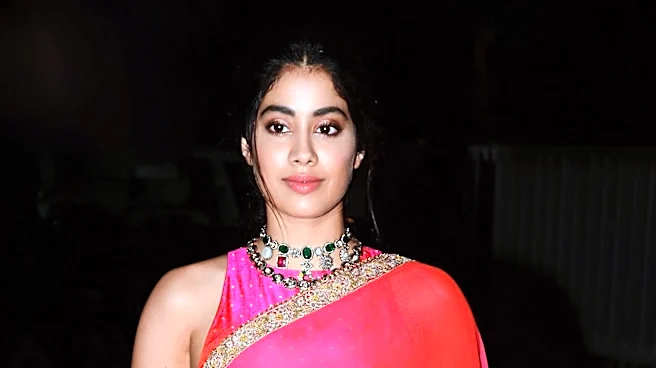
Janhvi Kapoor, an actor, attended the BoF 500 Gala in Paris, bringing Indian craftsmanship to the international fashion spotlight. For the event, held during Paris Fashion Week, Kapoor wore a custom creation by Pankaj S Heritage, styled by Rhea Kapoor.
The ensemble was crafted from 460-count Bengal Muslin, an Indian textile, and featured a contemporary interpretation of the traditional six-yard silhouette with a low-slung drape, bare shoulders, and a floor-skimming pallu. The off-white outfit was adorned with intricate handcrafted embellishments, including gold beads, pearls, shells, emeralds, polkis, and tassels, arranged from the shoulder towards the arm. This styling aimed to highlight the craftsmanship and textile work while maintaining a modern aesthetic, making Indian design and textile references central to her appearance at the global fashion event.
Why It's Important?
Janhvi Kapoor's appearance at the BoF 500 Gala, showcasing Indian craftsmanship, is significant for several reasons. It elevates traditional Indian textiles and design aesthetics onto a prominent international fashion stage, potentially increasing global appreciation and demand for Indian artisanal work. This exposure can open new markets for Indian designers and craftspeople, fostering economic opportunities and cultural exchange. For the U.S. fashion market, this could mean a greater influx of Indian-inspired designs and textiles, influencing trends and diversifying consumer choices. It also highlights the growing influence of non-Western fashion narratives in the global industry, challenging traditional Eurocentric dominance and promoting a more inclusive and diverse fashion landscape. This can inspire U.S. designers and brands to explore and incorporate diverse cultural elements into their collections, enriching the overall fashion ecosystem.
What's Next?
The visibility gained by Indian craftsmanship through Janhvi Kapoor's appearance at the BoF 500 Gala could lead to increased interest from international buyers, designers, and fashion enthusiasts. This might result in more collaborations between Indian artisans and global fashion houses, as well as a greater presence of Indian textiles and designs in international collections and retail spaces. We may see a trend of more celebrities and public figures from diverse backgrounds using global platforms to showcase their cultural heritage through fashion. This could further diversify the global fashion narrative and encourage a broader appreciation for traditional crafts from various regions. For the U.S. market, this could translate into more curated collections featuring Indian textiles and craftsmanship, influencing consumer preferences and retail offerings.
Beyond the Headlines
Janhvi Kapoor's choice to wear a custom Pankaj S Heritage ensemble crafted from Bengal Muslin at a high-profile international event like the BoF 500 Gala carries deeper cultural and economic implications. It represents a conscious effort to bridge traditional craftsmanship with contemporary fashion, demonstrating that heritage textiles can be both modern and globally relevant. This act not only promotes Indian cultural identity but also supports the livelihoods of artisans involved in traditional textile production. In a globalized fashion industry often criticized for its lack of diversity and cultural appropriation, such an initiative can foster a more respectful and equitable exchange of cultural aesthetics. It encourages a narrative where traditional crafts are valued for their artistry and sustainability, potentially influencing ethical consumption patterns and promoting fair trade practices within the fashion supply chain globally.