




What's Happening?
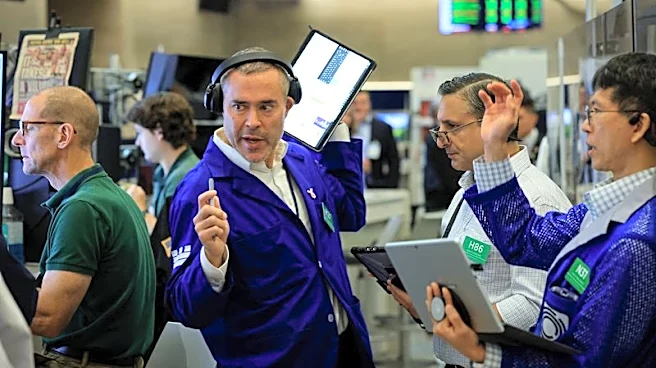
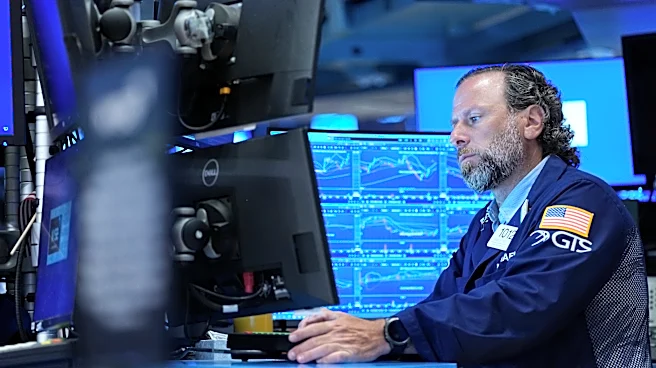
The Dow Jones Industrial Average experienced its worst single-day drop since April 2025, falling by 1,153 points or 2.19%, following the Federal Reserve's decision to keep interest rates unchanged. This decision was met with dissent from three of the twelve
Federal Open Market Committee members who favored a rate hike. The S&P 500 and Nasdaq also closed sharply lower. The bond market reacted negatively, with the 10-year Treasury yield increasing by 7 basis points to over 4.67%, and the 30-year yield climbing 10 basis points to exceed 5.2%, its highest level since 2007. The market's response indicates concerns about the Fed's ability to manage inflation, especially amid rising oil prices due to Middle East tensions.
Why It's Important?
The Federal Reserve's decision to maintain interest rates has significant implications for the U.S. economy and financial markets. The sharp decline in major indices and the rise in bond yields suggest that investors are losing confidence in the Fed's ability to control inflation. This situation could lead to increased market volatility and uncertainty as investors adjust their expectations for future monetary policy. The decision also highlights the challenges the Fed faces in balancing economic growth with inflation control, particularly in the context of geopolitical tensions and fluctuating energy prices.
What's Next?
The market's reaction to the Fed's decision will likely lead to increased focus on future economic data and Fed communications. Investors will be closely monitoring upcoming economic indicators and Fed statements for any signs of a change in monetary policy. The next Fed rate decision in September will be particularly important in shaping market expectations and investor sentiment. Additionally, the ongoing geopolitical tensions and their impact on energy prices could further influence the Fed's policy decisions and market dynamics.