





What's Happening?
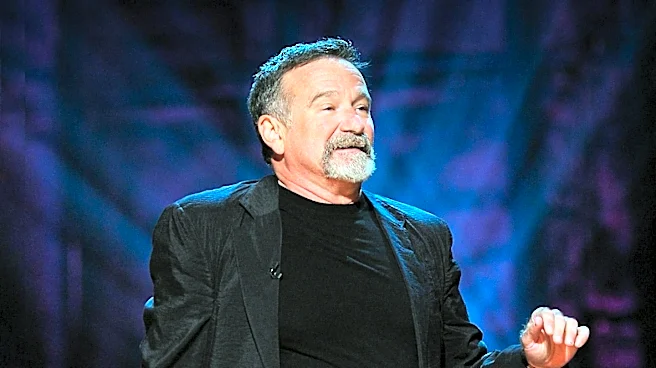
Zelda Williams, daughter of the late actor Robin Williams, has publicly revealed she is being harassed by conspiracy theorists. These individuals are convinced that her father faked his own death in 2014 and is secretly still alive, partly due to the use
of AI technology. Zelda Williams shared a screenshot of a comment tagging her, which suggested her father was alive and using an old-age filter under the Instagram account '@unc.pappy'. She refuted these claims, stating that the account in question, run by Blair Carlyle, openly admits to using AI to alter his appearance for impersonations, including a voice impression of Robin Williams. This harassment follows Zelda Williams's previous vocal concerns in 2023 about the use of AI to replicate celebrities, specifically mentioning that her late father's voice had already been replicated by artificial intelligence.
Why It's Important?
This situation highlights the growing societal impact of artificial intelligence, particularly deepfake technology, and its potential for misuse. The harassment faced by Zelda Williams underscores the emotional and psychological toll that online conspiracy theories, amplified by AI capabilities, can inflict on individuals and families. It also brings to the forefront ethical concerns surrounding AI's ability to replicate human likeness and voice, especially for deceased public figures. The ease with which AI can create convincing, yet false, digital representations challenges the public's ability to discern reality from fabrication, potentially eroding trust in digital media and fostering environments ripe for misinformation and harassment. This incident serves as a stark reminder of the need for responsible AI development and greater digital literacy to combat the spread of harmful conspiracy theories.
Beyond the Headlines
The harassment of Zelda Williams by conspiracy theorists, fueled by AI technology, points to a broader societal challenge regarding the intersection of grief, public figures, and emerging technologies. The ability of AI to convincingly mimic voices and appearances blurs the lines between reality and fiction, creating fertile ground for individuals prone to believing elaborate hoaxes. This incident raises questions about the legal and ethical frameworks needed to protect individuals from digital impersonation and the spread of AI-generated misinformation, particularly when it impacts personal lives and the memory of deceased loved ones. It also underscores the psychological impact on those targeted by such campaigns, forcing them to contend with baseless accusations and public scrutiny during private grieving processes. The case exemplifies how technological advancements, while offering many benefits, also introduce complex social and ethical dilemmas that require careful consideration and proactive solutions.