
What's Happening?
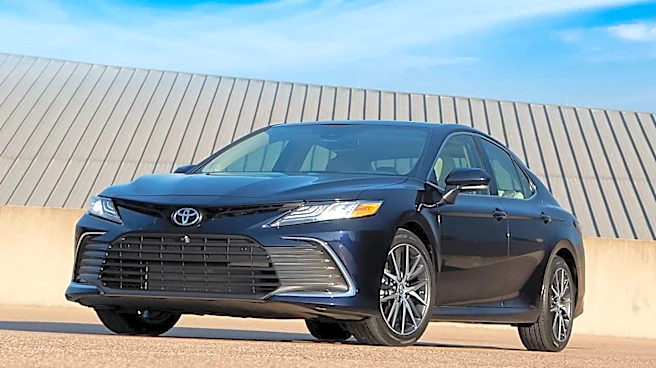
A detailed comparison between used Toyota Camry and Honda Accord models reveals insights into their reliability, pricing, fuel efficiency, and features. Both vehicles are highly rated for reliability, with
the Accord scoring 4.5 out of 5 on RepairPal and the Camry scoring 4.0. However, iSeeCars' 2026 reliability ranking places the Camry first among midsize cars and the Accord third. In terms of cost, the Accord is generally a few hundred dollars cheaper than the Camry for models of the same age, according to Kelley Blue Book's national Fair Purchase Price. For example, a 2023 Accord LX is approximately $21,500, while a 2023 Camry LE is about $21,800. Fuel efficiency varies by engine type; Camry hybrids generally offer better mileage (e.g., 52 mpg combined for a 2018–2024 Camry Hybrid LE) compared to Accord hybrids (e.g., 48 mpg for a 2020–2022 Accord Hybrid). Conversely, gas-powered Accord models tend to have better fuel economy than their Camry counterparts. The Camry also offers all-wheel drive (AWD) options, which are not available on any Accord model.
Why It's Important?
This comparison is crucial for consumers in the U.S. used car market, providing a comprehensive guide for making informed purchasing decisions between two of the most popular midsize sedans. The detailed breakdown of reliability, cost, and fuel efficiency directly impacts household budgets and long-term ownership costs. For instance, the Camry's superior hybrid MPG can lead to significant fuel savings over time, while the Accord's slightly lower purchase price might appeal to budget-conscious buyers. The availability of AWD in certain Camry models offers a distinct advantage for drivers in regions with challenging weather conditions, enhancing safety and utility. Understanding these differences helps buyers align their vehicle choice with their specific needs, whether it's prioritizing fuel economy, initial cost, or all-weather capability. The transferability of hybrid battery warranties, 10 years/150,000 miles for newer Camrys and 8 years/100,000 miles for Accords, also plays a significant role in long-term value and peace of mind for used car buyers.
What's Next?
Prospective buyers of used Toyota Camrys and Honda Accords will likely use this detailed comparison to narrow down their choices. The information regarding specific model years, such as the recommended 2021 or 2022 LE, SE, or Hybrid LE for the Camry, and 2021 or 2022 LX, Sport, or Hybrid for the Accord, will guide their search. Dealers like Gale Toyota in Enfield are positioned to assist customers with trade-ins and purchases, offering appraisals and confirming recall completions. The emphasis on checking vehicle history, service records, and obtaining hybrid battery health reports before purchase will become standard practice for diligent buyers. Furthermore, the ongoing competition between these two automotive giants will likely continue to drive innovations in fuel efficiency, safety features, and overall value, influencing future used car markets. Consumers will continue to weigh factors like AWD availability, trunk space, and rear legroom based on their evolving needs.
Beyond the Headlines
The enduring popularity and close competition between the Toyota Camry and Honda Accord in the used car market reflect broader consumer trends in the U.S. automotive industry. Both models represent reliability and value, making them staples for individuals and families seeking dependable transportation. The detailed comparison highlights a shift towards greater emphasis on fuel efficiency, particularly with hybrid options, as consumers become more environmentally conscious and seek to mitigate rising fuel costs. The availability of advanced safety features like Toyota Safety Sense 2.5+ and Honda Sensing in newer used models underscores the increasing importance of safety technology in purchasing decisions. This market segment also illustrates the long-term value retention of well-maintained vehicles from reputable manufacturers, influencing resale markets and trade-in values across the industry. The choice between these two vehicles often comes down to subtle preferences in driving dynamics, interior space, and specific feature sets, rather than significant disparities in overall quality.