

What's Happening?
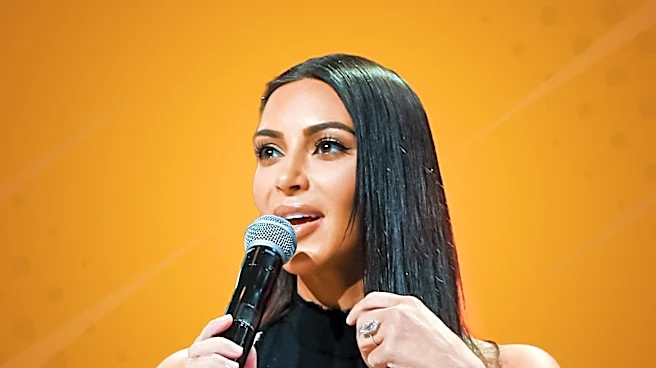
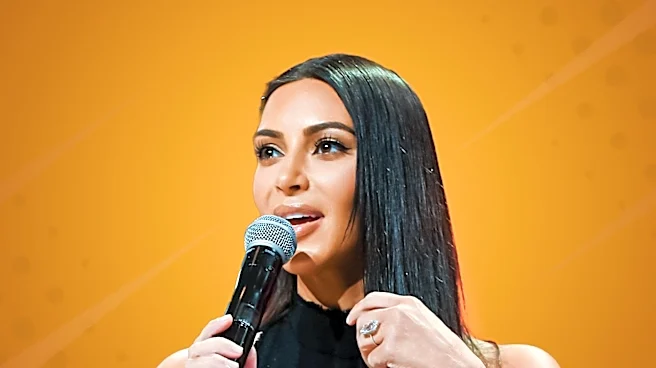
Kim Kardashian has reiterated her belief that the 1969 moon landing did not occur. During a November 19 episode of 'The Kardashians,' she stated to scientist Dr. Kate Biberdorf, "I’m a, like, we-didn’t-land-on-the-moon kind of gal." Scott Disick echoed
this sentiment, adding, "Not a chance we landed on the moon." This stance was maintained even after Dr. Biberdorf, a Notre Dame science professor, countered their claims by asserting, "I definitely think we landed on the moon. We’ve done it six times." Khloe Kardashian also expressed her indulgence in her sister's conspiracy theory, despite the expert opinion. This is not the first time Kardashian has voiced this theory, having previously drawn a strong reaction from NASA when she initially shared her views last year.
Why It's Important?
This event highlights the ongoing prevalence of conspiracy theories, even in the face of established scientific consensus and historical evidence. When public figures with significant platforms, such as Kim Kardashian, express skepticism about widely accepted historical events like the moon landing, it can inadvertently lend credibility to such theories among their large following. This can contribute to a broader distrust in scientific institutions and expert opinions, potentially impacting public understanding of science and critical thinking. The interaction also underscores the challenge scientists and educators face in communicating factual information effectively to a public increasingly exposed to alternative narratives, regardless of their factual basis. It reflects a societal trend where personal beliefs can sometimes outweigh empirical evidence, influencing public discourse on various topics.
What's Next?
While no immediate policy changes or official responses are expected from this reiteration, the continued discussion of such theories by public figures may prompt further engagement from scientific organizations or educational bodies. They might intensify efforts to disseminate accurate information about historical scientific achievements, such as the Apollo missions, to counteract misinformation. Social media platforms and traditional media outlets may also face renewed scrutiny regarding their role in amplifying or debunking conspiracy theories. For the Kardashian family, this stance could continue to be a talking point in their reality show, potentially leading to more discussions with experts or further exploration of the topic, which could either clarify or further complicate public perception.
Beyond the Headlines
The persistence of moon landing conspiracy theories, even decades after the event, points to deeper societal issues concerning trust in authority, government, and scientific institutions. It reflects a cultural phenomenon where narratives that challenge official accounts can gain traction, often fueled by a desire for alternative explanations or a general skepticism towards established power structures. This incident also touches upon the influence of celebrity culture on public opinion, where the views of prominent individuals, regardless of their expertise, can significantly shape the discourse. The challenge for society lies in fostering an environment where critical thinking and evidence-based reasoning are valued, while also understanding the psychological and sociological factors that make conspiracy theories appealing to some segments of the population.