


What's Happening?
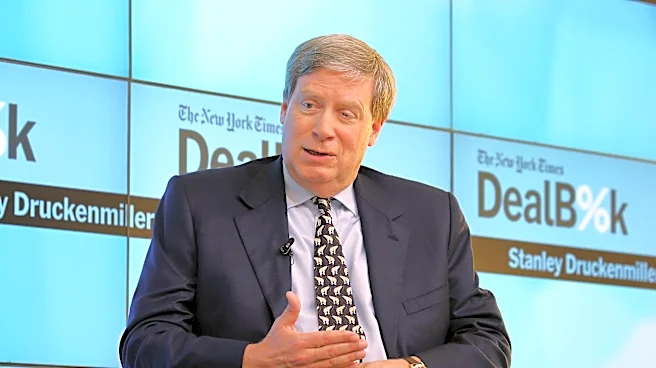
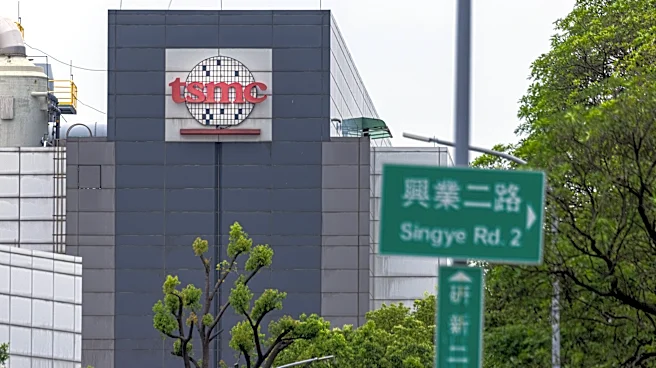
Stanley Druckenmiller's Duquesne Family Office dramatically cut its holdings in Taiwan Semiconductor Manufacturing Company (TSMC) during the third quarter. The firm reduced its stake from 589,680 shares to 32,700 shares, representing a 94% decrease. The shares sold
were valued at approximately $254 million at quarter-end prices. The remaining stake, worth $15 million, now constitutes only 0.4% of Duquesne Family Office's $4.15 billion in U.S. stocks, making it its 42nd-largest position. Similarly, Leopold Aschenbrenner's Situational Awareness completely divested its 2.65 million shares of TSMC, which were valued at $1.27 billion at the end of June. These sales were disclosed in 13F filings submitted between November 6 and November 16.
Why It's Important?
This significant divestment by prominent investors like Stanley Druckenmiller and Leopold Aschenbrenner signals a potential shift in investor sentiment towards Taiwan Semiconductor, a key player in the global chip manufacturing industry. While some investors like David Tepper, Brad Gerstner, and Ken Fisher maintained large positions, the actions of Druckenmiller and Aschenbrenner suggest differing views on the future demand for AI chips. TSMC is widely reported to be a major supplier for companies like Nvidia, which recently projected higher growth. Additionally, ASML, a critical toolmaker for chip manufacturers, has indicated that its planned supply will not meet demand in 2027 and 2028. The divergence in investment strategies among these influential figures could impact market perceptions and the stock's valuation, especially given that TSMC's stock has declined by 25% since the end of the third quarter.
What's Next?
The differing investment strategies among major investors regarding Taiwan Semiconductor will likely lead to continued market observation. The company's performance in the coming quarters, particularly in relation to AI chip demand and supply chain dynamics, will be closely scrutinized. Future 13F filings from these and other institutional investors will provide further insights into evolving sentiment. The ongoing demand projections from key customers like Nvidia and the supply constraints highlighted by ASML will remain critical factors influencing TSMC's stock performance and investor confidence. The market will be watching to see if the 'holders' or 'sellers' of TSMC stock prove to have made the more prescient bet on the future of the semiconductor industry.
Beyond the Headlines
The actions of these high-profile investors underscore the inherent complexities and speculative nature of investing in rapidly evolving technological sectors like semiconductors and artificial intelligence. While some investors are betting on continued growth driven by AI, others may be anticipating potential market corrections or shifts in the competitive landscape. The semiconductor industry is highly cyclical and sensitive to geopolitical tensions, supply chain disruptions, and technological advancements. The decisions by Druckenmiller and Aschenbrenner could reflect concerns about overvaluation, future competition, or broader economic uncertainties, even as other indicators suggest robust demand. This divergence highlights the ongoing debate about the sustainability of the current AI boom and its long-term impact on foundational technology companies.