


What's Happening?
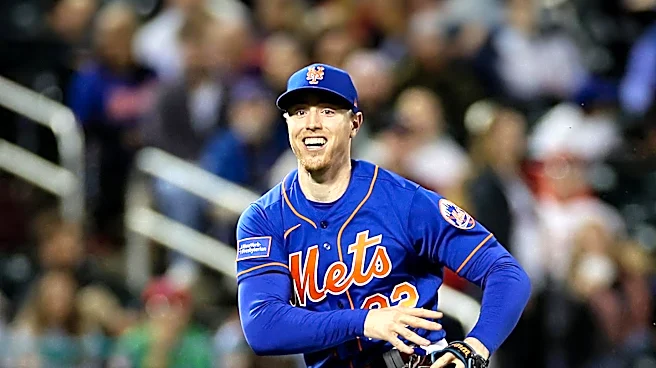
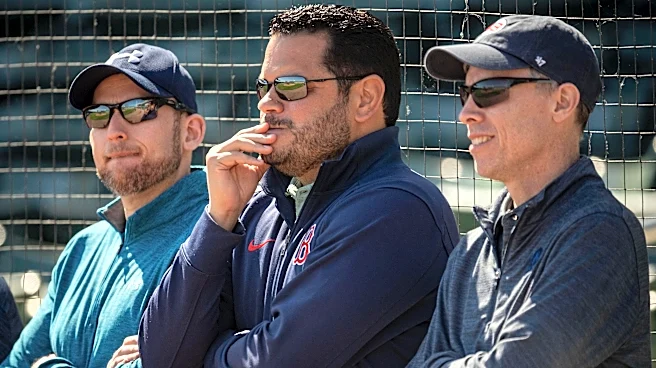
Mets owner Steve Cohen announced plans to bring in additional 'voices' to the front office to support president of baseball operations David Stearns. Cohen clarified that these additions do not necessarily mean hiring a new general manager but could involve
other roles aimed at introducing diverse perspectives and expertise. The goal is to incorporate individuals skilled in talent evaluation or those with prior experience in high-level front office positions. This move follows two consecutive seasons where the Mets failed to reach the playoffs, despite having the second-highest payroll in MLB at $358.1 million, including competitive balance tax. The team has been without a general manager since October 2023, when Billy Eppler resigned amidst an MLB investigation into his use of the injured list, which later resulted in a season-long suspension for fabricating injuries for roster management purposes. Cohen's statement indicates a strategic shift to bolster the team's operational leadership.
Why It's Important?
This decision by Steve Cohen highlights a critical juncture for the New York Mets organization and reflects a broader trend in professional sports where ownership takes a more active role in strategic personnel decisions. The emphasis on bringing in diverse opinions and experienced talent evaluators underscores a recognition that past strategies have not yielded desired results, despite significant financial investment. For the Mets, a team with a substantial payroll and high expectations, the failure to make the playoffs for two years running necessitates a re-evaluation of their operational structure. The absence of a general manager for an extended period, coupled with the previous GM's suspension, points to a need for stronger, more robust leadership in the front office. This move could set a precedent for how other high-spending sports franchises address underperformance, focusing on intellectual capital and diverse expertise rather than solely on player acquisitions. It also signals a commitment from ownership to long-term organizational health and competitive success.
What's Next?
The Mets are expected to make these front office additions during the upcoming offseason, which is described as pivotal for the team. While Cohen did not specify exact roles or timelines, the focus will be on identifying individuals who can complement David Stearns' leadership and contribute to talent evaluation and strategic planning. The team also needs to address its managerial situation, as interim skipper Andy Green is anticipated to return to his role as head of player development. The success of these new appointments will be crucial in shaping the Mets' roster and competitive strategy for future seasons. Stakeholders, including fans and analysts, will closely watch how these new 'voices' integrate into the existing structure and whether their contributions lead to improved on-field performance and a return to playoff contention. The offseason will likely involve significant personnel changes both in the front office and potentially on the field, as the team seeks to rebound from its recent struggles.
Beyond the Headlines
Beyond the immediate goal of improving the Mets' performance, Cohen's decision reflects a deeper organizational philosophy shift towards collaborative leadership and diversified expertise in sports management. The move away from a singular general manager role, or at least a redefinition of it, suggests an acknowledgment that modern baseball operations require a broader range of skills and perspectives. This could influence how other sports franchises structure their leadership, moving towards more committee-based or specialized roles rather than relying on one individual. The emphasis on 'getting more opinions' and 'people who are pretty good at either evaluating talent or people who have been in those positions before' indicates a desire to build a resilient and adaptable front office capable of navigating the complexities of player development, analytics, and roster construction in a highly competitive league. This strategic evolution could lead to a more sustainable model for success, prioritizing intellectual capital and collective wisdom over traditional hierarchical structures.