


What's Happening?
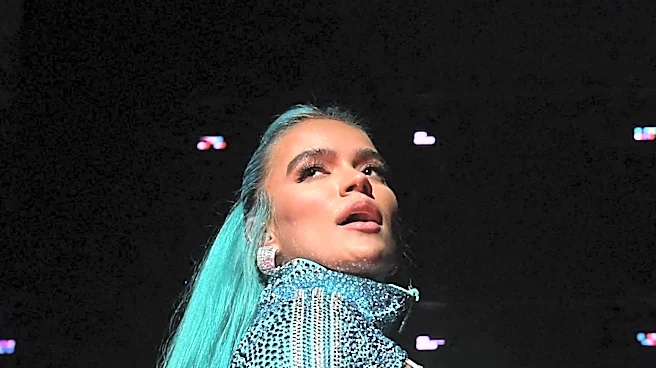
During a Karol G concert on Saturday, November 7, 2026, at Estadio BBVA in Monterrey, Nuevo León, Mexico, a cameraman experienced a dramatic fall. The incident occurred while the Colombian singer was performing her song 'Te llevas to.' Local media reports
indicate that an overhead camera system became entangled with the cameraman's equipment or backpack, lifting him several meters into the air before he detached and fell into the area between the stage and the audience. The entire sequence was captured by concertgoers and quickly circulated on social media. While some social media posts accused Karol G of witnessing the accident without reacting, available reporting from sources like Reporte Índigo, Info7, and UnoTV suggests that she was facing away from the incident and apparently did not notice the fall.
Why It's Important?
This incident highlights critical safety concerns at large-scale live events, particularly regarding the operation of complex stage equipment. The rapid spread of the incident via social media underscores the immediate and widespread impact of such events in the digital age, where public perception can be quickly shaped, sometimes without full factual context. For concert organizers and venues, it emphasizes the need for stringent safety protocols and regular equipment checks to prevent accidents involving technical staff. The differing accounts regarding Karol G's awareness also illustrate the challenges artists face in managing their image and public response during unforeseen circumstances, especially when social media narratives can diverge from reality. This event could prompt a review of safety standards for overhead camera systems and other dynamic stage elements in the entertainment industry.
What's Next?
Following the incident, it is likely that an investigation will be conducted into the cause of the cameraman's fall, focusing on equipment malfunction, operational procedures, and safety compliance. Concert organizers and venue management may face increased scrutiny regarding their safety measures for live performances. The entertainment industry as a whole might review and potentially update guidelines for the use of overhead camera systems and other aerial stage equipment to prevent similar occurrences. Public discussion on social media is expected to continue, potentially influencing fan perceptions and prompting further calls for transparency and accountability from event organizers. The cameraman's condition and any potential legal actions or claims for damages will also be a developing aspect of this story.
Beyond the Headlines
Beyond the immediate safety implications, this event touches upon the broader issue of worker safety in the entertainment industry, where high-pressure environments and elaborate productions can sometimes lead to overlooked risks. The incident also serves as a stark reminder of the power of social media to instantly disseminate information, both accurate and speculative, and its role in shaping public opinion before official statements or investigations are complete. This can create a challenging environment for public figures and organizations to manage their narrative. Furthermore, it raises questions about the ethical responsibilities of audience members in capturing and sharing potentially distressing events, balancing the desire for documentation with respect for those involved in an accident.