





What's Happening?
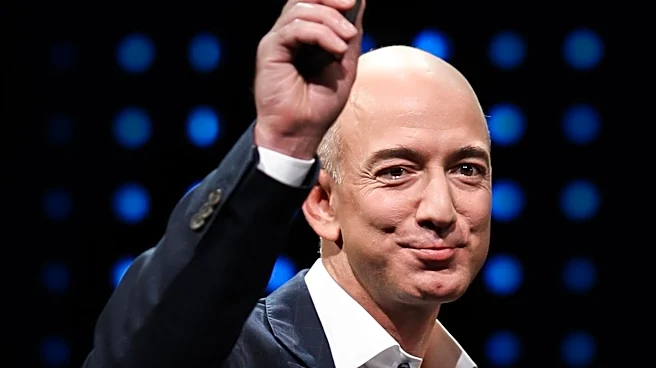
Jeff Bezos, the founder of Amazon, recently donated 771,492 shares of Amazon stock, valued at nearly $200 million, to charitable causes. Specifically, 674,088 shares were given on November 12, and an additional 97,404 shares went to the Bezos Earth Fund
on November 13. This philanthropic action comes years after a notable remark Bezos made in November 2018 during a staff meeting in Seattle. An employee had asked him about lessons from Sears' bankruptcy, to which Bezos responded, "Amazon is not too big to fail," and predicted, "I predict one day Amazon will fail. Amazon will go bankrupt." He emphasized that focusing on internal matters instead of customers would be the "beginning of the end." Despite this past warning, Amazon, which turned 32 in July, recently topped the Fortune 500 for the first time, reporting $716.9 billion in 2025 revenue. Bezos's recent stock donations represent a small fraction, less than 0.3%, of his total stake in the company, as he still holds over 878 million shares.
Why It's Important?
This event is significant for several reasons, particularly concerning corporate philanthropy, wealth management, and the long-term outlook of major U.S. corporations. Bezos's substantial donation highlights the growing trend of ultra-wealthy individuals contributing to charitable causes, often through stock transfers, which can have tax advantages. His past warning about Amazon's potential failure, juxtaposed with the company's current success as the largest U.S. company by revenue, underscores the dynamic and often unpredictable nature of the business world. For investors, particularly those with significant portions of their retirement savings in a single stock like Amazon, Bezos's 2018 statement serves as a cautionary tale about concentration risk, even in seemingly invincible companies. The example of a hypothetical 68-year-old retiree with 1,000 Amazon shares illustrates the volatility and potential gains or losses associated with such investments, emphasizing the importance of diversification and strategic retirement planning. The donations to the Bezos Earth Fund also signal continued investment in environmental initiatives, reflecting a broader corporate and philanthropic focus on climate change.
What's Next?
The recent stock donations by Jeff Bezos are likely to continue fueling discussions around philanthropic giving by high-net-worth individuals and the tax implications of such transfers. For the Bezos Earth Fund, these contributions will enable further investment in climate and environmental initiatives, potentially leading to new projects or expanded efforts in these areas. Amazon, despite its founder's past warnings, is expected to maintain its dominant position in the market, given its recent achievement of topping the Fortune 500. However, the underlying message from Bezos about the importance of customer focus to avoid decline remains a critical business principle for the company's leadership. For individual investors, the scenario presented in the source regarding a retiree's Amazon holdings may prompt a re-evaluation of portfolio diversification strategies, especially concerning concentration risk in single stocks. Financial advisors may increasingly use such examples to educate clients on the importance of balanced investment approaches and careful planning for retirement income, particularly in managing capital gains taxes when selling appreciated assets.
Beyond the Headlines
Beyond the immediate financial and philanthropic aspects, this story touches upon deeper themes of corporate longevity, leadership philosophy, and the societal role of immense wealth. Bezos's 2018 prediction about Amazon's potential failure, despite its current success, reflects a profound understanding of corporate life cycles and the constant need for innovation and customer-centricity to avoid stagnation. This perspective offers a valuable lesson for leaders across all industries, emphasizing that no company, regardless of its size or market dominance, is immune to disruption or decline if it loses sight of its core mission. The substantial charitable donations also raise questions about the ethical responsibilities of the ultra-rich and the impact of their giving on global challenges. While these donations are significant, they also highlight the vast disparities in wealth and the ongoing debate about how such fortunes can best serve the public good. The story implicitly encourages a broader societal conversation about sustainable business practices, responsible wealth management, and the long-term vision required to navigate an ever-changing economic landscape.