




What's Happening?
U.S. importers face a complex landscape when calculating import duties, particularly concerning Section 301 and Section 232 tariffs. These measures, often applied in addition to ordinary duties, are not always cumulative, and their application depends
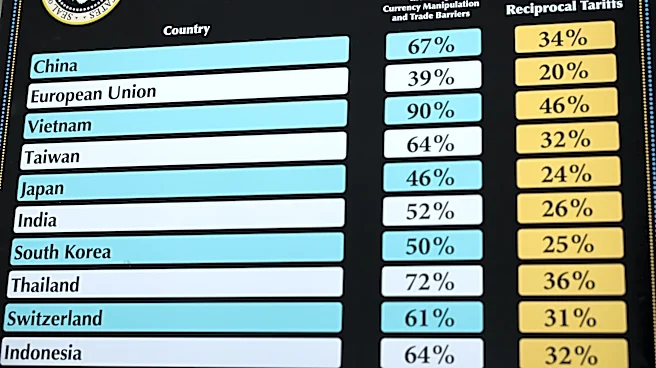
on specific product classifications, origins, and exclusion provisions. Section 301 tariffs stem from U.S. trade investigations and target designated classes of products from particular origins, while Section 232 measures relate to national security and can cover certain metals, derivatives, or other identified classes. Importers must identify the product's complete ten-digit HTSUS statistical reporting number, verify the country of origin, and check active Chapter 99 headings, Section 301 lists, exclusions, and Section 232 treatments. The effective dates of these measures are also critical, as rates can expire or change, requiring constant vigilance from importers.
Why It's Important?
The intricate nature of Section 301 and Section 232 tariffs significantly impacts U.S. businesses by directly affecting their landed costs, profit margins, and supply chain strategies. The potential for these tariffs to stack, or conversely, for non-stacking rules or exclusions to apply, creates considerable uncertainty and risk. A miscalculation can lead to substantial unexpected costs, impacting working capital and potentially making imported goods uncompetitive. For example, a 10-point increase in a duty rate on a $50,000 customs value can add $5,000 in immediate cash expense. This complexity necessitates specialized expertise in tariff classification and trade compliance, often requiring the engagement of licensed customs brokers or legal guidance. The need to constantly verify applicable rates and exclusions for each product and entry date adds administrative burden and cost, ultimately influencing pricing decisions for consumers and the viability of importing certain goods into the U.S. market.
What's Next?
U.S. importers must prioritize thorough due diligence and continuous monitoring of tariff regulations. This includes meticulously identifying the correct HTSUS codes for their products, verifying the country of origin, and staying updated on all Section 301 and Section 232 lists, exclusions, and effective dates. Businesses should not assume that all headline percentages automatically apply or stack; instead, they must confirm the applicability of each rate to their specific product and transaction. Documenting all assumptions in purchase orders and clearly communicating who bears changes in import duty under agreed Incoterms is crucial. Given the dynamic nature of trade policy, importers should consider scenario planning with various tariff rates and dates to assess potential financial impacts and build contingency into their pricing and operational models. Consulting official resources like USTR, USITC, and CBP, or engaging customs classification advice, will remain essential.
Beyond the Headlines
The ongoing complexity surrounding Section 301 and Section 232 tariffs highlights a broader shift in U.S. trade policy towards more targeted and dynamic measures. This approach, while aiming to address specific trade imbalances or national security concerns, introduces significant operational challenges for businesses. The need for granular, product-specific tariff analysis moves beyond traditional broad-stroke trade agreements, demanding a higher level of internal expertise and external advisory reliance. This can disproportionately affect small and medium-sized enterprises (SMEs) that may lack the resources to navigate such intricate regulations, potentially creating barriers to entry for new importers or favoring larger corporations with dedicated compliance teams. The constant evolution of these tariffs also underscores the political dimension of trade, where policy decisions can rapidly alter economic realities for U.S. industries and consumers, fostering an environment of uncertainty that can deter long-term investment and supply chain stability.