






What's Happening?
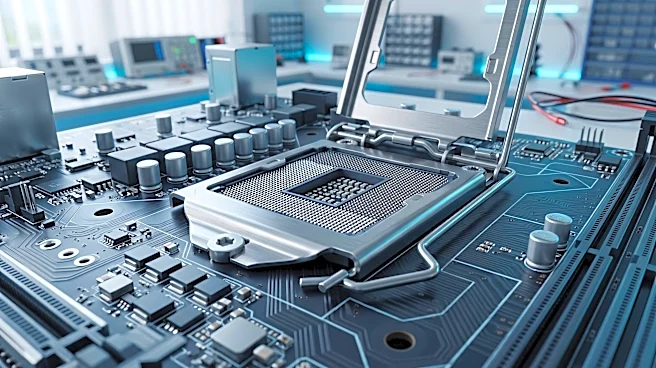
Intel's upcoming Nova Lake-S CPUs, rumored for mass production in Q4 2026 and a Q1 2027 launch, will necessitate a new motherboard platform featuring the LGA 1954 socket. This new socket is required due to a significant increase in I/O and power demands
for Nova Lake CPUs, which are expected to feature up to 52 cores in flagship models and will be Intel's first bLLC (big last-level cache) processors. The accompanying chipsets, internally codenamed 'Nova Point,' will include Z990, Z970, B960, W980, and Q970. These new chipsets will offer increased PCIe 5.0 connectivity, with the Z990 flagship providing 12 Gen5 lanes from the chipset and a DMI Gen5 x4 link. The platform will also support Thunderbolt 5 (TB5) with speeds up to 80 Gbps bidirectional or 120 Gbps in boost mode, DisplayPort 2.1, and USB4. Base memory speeds will increase to DDR5-8000. The Nova Point chipset itself will be smaller than its predecessor but will have a higher base power of 7.9 Watts, potentially requiring active cooling for high-end Z990/970 chipsets.
Why It's Important?
This platform overhaul marks a significant generational leap for Intel, impacting PC enthusiasts, gamers, and professional users. The introduction of the LGA 1954 socket means that existing motherboards will not be compatible, requiring users to invest in new hardware for CPU upgrades. The enhanced PCIe 5.0 lanes, both from the CPU and chipset, will enable faster storage solutions and more flexible configurations for NVMe SSDs, benefiting users who demand high-speed data transfer. The widespread adoption of Thunderbolt 5 will provide significantly faster external connectivity, crucial for professionals working with large files or multiple high-resolution displays. The increased base memory speed to DDR5-8000 will push the boundaries of system performance, though it will also raise the cost of entry for users seeking to maximize the platform's potential. The potential need for active chipset cooling highlights the increasing power density and thermal management challenges in modern high-performance computing, which could influence motherboard design and overall system acoustics.
What's Next?
Mass production of Nova Lake-S CPUs is anticipated to begin in Q4 2026, with a launch expected in Q1 2027. Motherboard manufacturers like Gigabyte and ASRock have already shown leaks of their upcoming Z990 motherboards, with full lineups from MSI and Asus expected. Consumers can anticipate a wide range of new motherboards across various price points and form factors. Pricing for these new motherboards is expected to increase due to enhanced features, increased PCIe 5.0 bandwidth, and hardware upgrades. The official unveiling of these new CPUs and motherboards is likely to occur at major tech events such as CES 2027. Users planning to upgrade will need to consider the total cost of the new platform, including the CPU, motherboard, and potentially faster DDR5 RAM to fully leverage the new capabilities. The market will closely watch how Intel's Nova Lake CPUs perform against AMD's offerings, particularly its X3D CPUs, to determine the platform's competitiveness and adoption rate.
Beyond the Headlines
The continuous evolution of CPU sockets and chipsets reflects the relentless pursuit of performance and I/O capabilities in the PC industry. Intel's move to LGA 1954 and the Nova Point chipsets signifies a strategic response to growing demands from AI, gaming, and content creation workloads that require ever-increasing data throughput and processing power. The shift towards higher power consumption and the potential need for active chipset cooling also underscore the growing thermal challenges in miniaturized electronics, pushing innovation in cooling solutions and system design. This generational change also has broader implications for the PC ecosystem, driving demand for faster peripherals like PCIe 5.0 NVMe drives and Thunderbolt 5 devices. The increased complexity and cost of these high-end platforms could further segment the PC market, with mainstream users potentially holding onto older generations longer, while enthusiasts and professionals drive adoption of the latest technologies. This cycle of innovation continues to push the boundaries of what personal computing can achieve, albeit with increasing investment requirements for early adopters.