







What's Happening?
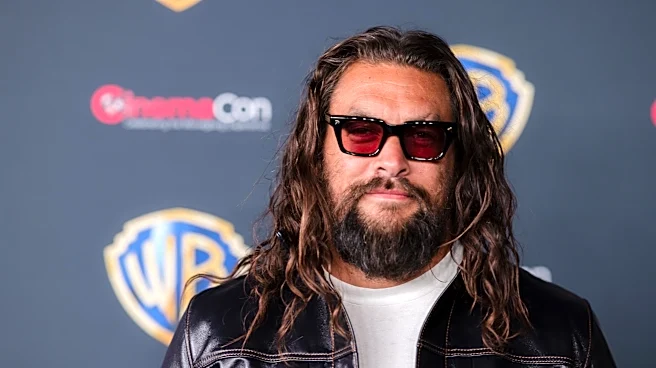
The video game adaptation film 'Street Fighter,' starring Jason Momoa and released in 2026, is facing a substantial box office decline. After opening at $31 million and topping the domestic box office in its first weekend, the film's performance has sharply
decreased. In its second weekend, it saw a 72.1% drop, earning $8.6 million. The downward trend continued into its third weekend with a 57.4% decline, grossing $3.6 million and losing 750 screens. By its fourth weekend, the film dropped to eleventh place domestically, earning an estimated $2.15 million from 1,760 theaters, losing an additional 1,065 locations. The per-theater average fell significantly from $8,608 to $1,221. As of November 8, 2026, the film has grossed $57.4 million domestically and $41.7 million internationally, totaling $99.1 million worldwide against a reported production budget of $82 million. Critics have given the film a 41% approval rating on Rotten Tomatoes and a Metacritic score of 43 out of 100, indicating mixed or average reviews, while audiences polled by CinemaScore gave it a 'B-' grade.
Why It's Important?
The significant box office underperformance of 'Street Fighter' highlights the challenges faced by video game adaptations in the film industry, even with a prominent actor like Jason Momoa. A film typically needs to earn approximately 2.5 times its production budget to break even, placing 'Street Fighter's' break-even point near $205 million. Its current worldwide total of $99.1 million suggests it is unlikely to reach this target, indicating a financial loss for Legendary Pictures and Paramount Pictures. This outcome could influence future investment decisions in similar video game-to-film projects, potentially making studios more cautious about allocating large budgets to such adaptations. The mixed critical and audience reception also underscores the difficulty in satisfying both long-time fans of the source material and general moviegoers, impacting the film's commercial viability and the studios' reputation in adapting popular franchises.
What's Next?
Given the substantial box office decline and negative critical reception, 'Street Fighter' is expected to continue its struggle in theaters, likely leading to further reductions in screen count. The film's inability to reach its break-even point will result in financial losses for Legendary Pictures and Paramount Pictures. This performance may prompt a reevaluation of strategies for future video game adaptations within these studios and the broader industry. For Jason Momoa, while this film is a setback, his involvement in other major franchises, such as 'Fast & Furious,' suggests his career trajectory is unlikely to be severely impacted long-term. The film's poor performance could also influence the market for home video releases and streaming rights, as its theatrical underperformance may reduce its perceived value for post-theatrical distribution.
Beyond the Headlines
The commercial failure of 'Street Fighter' contributes to a broader narrative about the hit-or-miss nature of video game adaptations in Hollywood. Despite advancements in special effects and a growing recognition of gaming as a mainstream entertainment medium, translating game narratives and mechanics to the big screen remains a complex challenge. This film's struggle, even with a recognizable star, suggests that a strong brand name and a popular actor are not sufficient guarantees of success. It raises questions about the creative approaches to adapting video game lore, the importance of critical reception, and audience expectations. The outcome may reinforce a cautious approach among studios, potentially leading to more conservative budgets or a greater emphasis on proven creative teams for future video game-based projects, impacting the diversity and ambition of such adaptations.