







What's Happening?
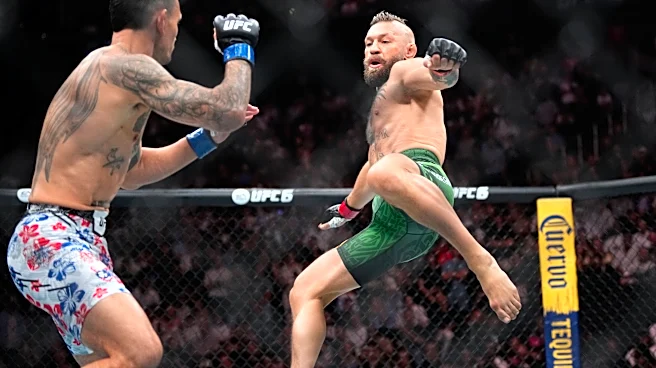
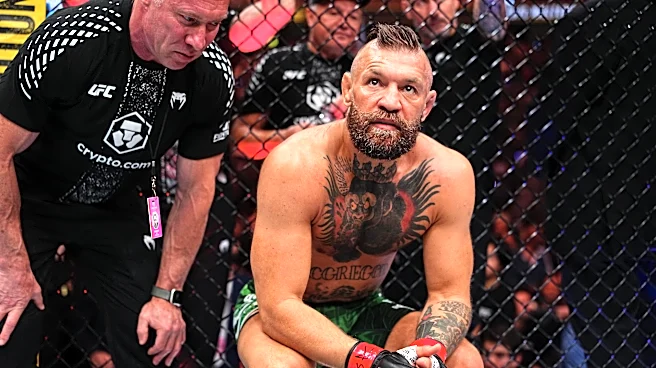
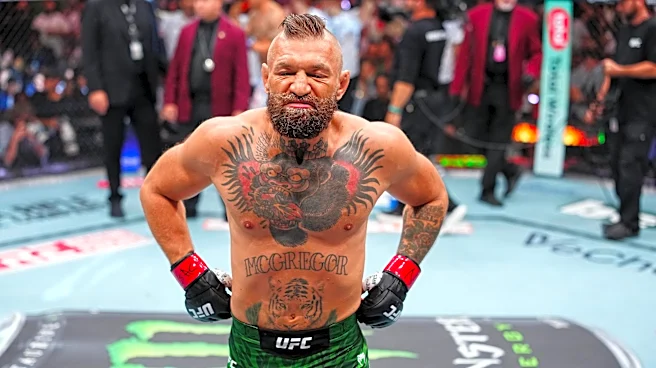
Conor McGregor has confirmed that he suffered an ACL and meniscus injury during his fight against Max Holloway at UFC 329. The injury occurred when McGregor attempted a jumping switch kick, leading to an immediate halt in the fight. Despite the setback,
McGregor remains optimistic about his recovery, citing advancements in regenerative medicine and training methods. He has already begun rehabilitation exercises and is targeting a return to the octagon by next summer. This timeline aligns with the end of his current UFC contract, making his next fight a significant event for both McGregor and the promotion.
Why It's Important?
McGregor's injury and subsequent recovery plan are crucial for several reasons. As a major draw for the UFC, McGregor's fights generate substantial revenue and media attention. His absence from the sport affects the UFC's promotional strategies and financial outlook. For McGregor, the injury represents another challenge in his storied career, testing his resilience and ability to return to peak performance. The situation also underscores the importance of injury prevention and management in combat sports, highlighting the physical toll on athletes and the role of medical advancements in their recovery.
What's Next?
McGregor will continue his rehabilitation with the goal of returning to competition by next summer. This timeline will allow him to fulfill his current UFC contract, potentially setting the stage for a high-profile matchup. The UFC will likely monitor McGregor's progress closely, adjusting its promotional plans accordingly. Fans and analysts will be keenly interested in McGregor's recovery and potential opponents, as his return could significantly impact the lightweight division and the UFC's overall landscape.