






What's Happening?
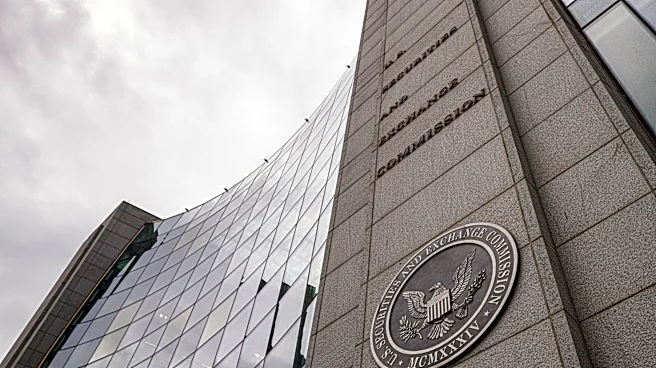
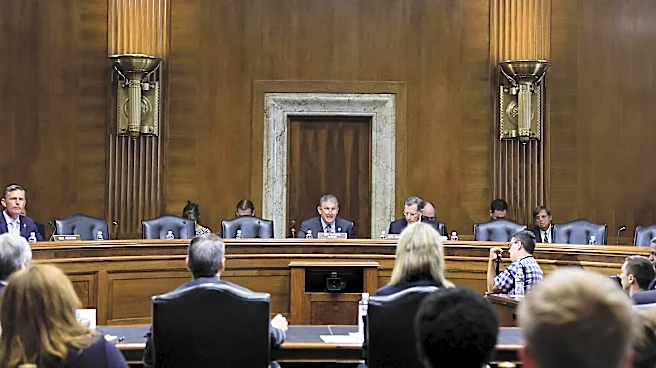
During a U.S. Senate Committee on Banking, Housing, and Urban Affairs hearing, Securities and Exchange Commission (SEC) commissioner nominees Kristin Johnson and Steven Levine expressed differing views on the risks associated with private credit. The
hearing is part of the ongoing confirmation process for their appointments to the SEC. Their testimonies highlighted varying perspectives on how to approach and regulate the burgeoning private credit market, a sector that has seen significant growth and increasing scrutiny from financial regulators. The divergence in their opinions suggests potential future debates within the SEC regarding the oversight and management of private credit, which could impact financial institutions and investors involved in this market.
Why It's Important?
The differing opinions between Kristin Johnson and Steven Levine on private credit risk are significant because they could shape the future regulatory approach of the SEC towards this rapidly expanding financial sector. Private credit, which involves direct lending by non-bank institutions, has grown substantially, offering alternative financing options but also raising concerns about transparency, liquidity, and systemic risk. The SEC's stance on private credit can impact the availability of capital for businesses, the risk exposure of institutional investors, and the overall stability of the U.S. financial system. A more stringent regulatory approach, favored by one nominee, could increase compliance costs for private credit funds and potentially limit their growth, while a more lenient approach, possibly preferred by the other, might encourage further expansion but could also heighten financial risks. This debate is crucial for investors, financial firms, and companies that rely on private credit for funding.
What's Next?
The confirmation process for Kristin Johnson and Steven Levine will continue, with the Senate Committee on Banking, Housing, and Urban Affairs evaluating their qualifications and perspectives. Their divergent views on private credit risk will likely be a key point of discussion as senators consider their suitability for roles on the SEC. If confirmed, their individual approaches to private credit could influence the SEC's future rulemaking and enforcement actions. The financial industry, particularly those involved in private credit, will closely monitor the outcome of these confirmations and any subsequent policy shifts. The SEC's eventual regulatory framework for private credit will have significant implications for market participants, potentially leading to new compliance requirements or changes in investment strategies.
Beyond the Headlines
The debate over private credit risk extends beyond immediate regulatory concerns, touching upon fundamental questions about the evolving landscape of financial markets. The growth of private credit reflects a broader shift in financing away from traditional banking institutions, driven by factors such as increased bank regulation and the search for higher yields by investors. This shift raises questions about the 'shadow banking' system and its potential impact on financial stability. The SEC's approach will not only address specific risks but also implicitly define the boundaries between regulated and less-regulated financial activities. The long-term implications could include a re-evaluation of systemic risk frameworks, a potential rebalancing of power between traditional banks and alternative lenders, and a redefinition of investor protection in an increasingly complex financial environment. The outcome of this debate could set precedents for how new financial innovations are integrated into the existing regulatory structure.