



What's Happening?
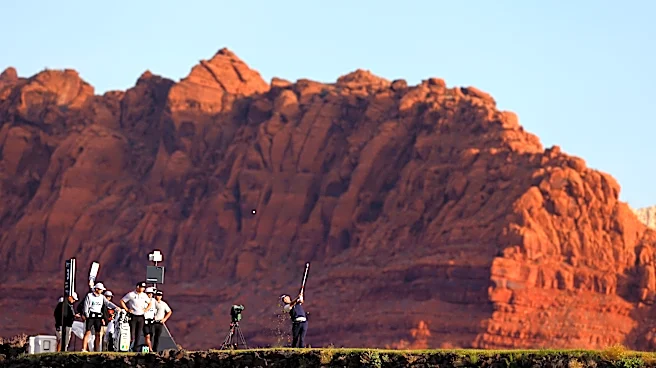
Robert Redford's Sundance, located in Utah, began in 1961 when he purchased two acres for his family. This initial acquisition evolved into a broader vision in the late 1960s when he bought a canyon, transforming it into Sundance, an arts and conservation
retreat. Redford's development philosophy emphasized rustic buildings that blend seamlessly into the natural landscape. Beyond the resort, he established the Institute for Resource Management and engaged in decades of activism, championing environmental causes. Sundance's land use is carefully balanced, with 50 developed acres, 450 recreation acres, and significant preserved wildlife habitat. In 2020, Sundance changed hands, but its core offerings as an arts and conservation retreat continue.
Why It's Important?
Sundance stands as a pioneering example of sustainable development and environmental stewardship in the U.S. It demonstrates how commercial ventures can coexist with and even enhance natural conservation efforts. Redford's vision influenced a generation of developers and conservationists, showcasing that economic viability does not have to come at the expense of ecological integrity. The establishment of the Institute for Resource Management further solidified Sundance's role as a hub for environmental advocacy and education, contributing to broader national conversations about land use, resource management, and the importance of preserving natural landscapes. Its legacy continues to inspire integrated approaches to tourism, arts, and environmental protection, offering a model for responsible development across the country.
What's Next?
Although Sundance changed ownership in 2020, the resort continues to operate as an arts and conservation retreat, suggesting a commitment by the new owners to maintain its founding principles. The ongoing operation of Sundance means its influence as a model for sustainable tourism and arts patronage will persist. Future developments at Sundance will likely continue to balance guest experiences with environmental preservation, adhering to the established ethos. The resort's continued existence also means it will remain a significant cultural landmark, potentially inspiring new generations to engage with environmentalism and the arts through its unique blend of offerings and its historical commitment to these values.
Beyond the Headlines
Sundance represents more than just a resort; it embodies a philosophy of living in harmony with nature and fostering artistic expression. Redford's decision to integrate development with conservation challenged conventional notions of land use, proving that economic success and ecological responsibility are not mutually exclusive. This holistic approach has had a profound cultural impact, promoting an aesthetic of understated elegance and respect for the environment that has influenced architecture, design, and lifestyle choices beyond Utah. Furthermore, Sundance's role as a retreat for artists and environmentalists has fostered a community dedicated to creative and sustainable practices, creating a ripple effect that extends into various sectors of American society, from independent filmmaking to eco-tourism. It serves as a testament to the power of individual vision in shaping enduring legacies that benefit both people and the planet.