


What's Happening?
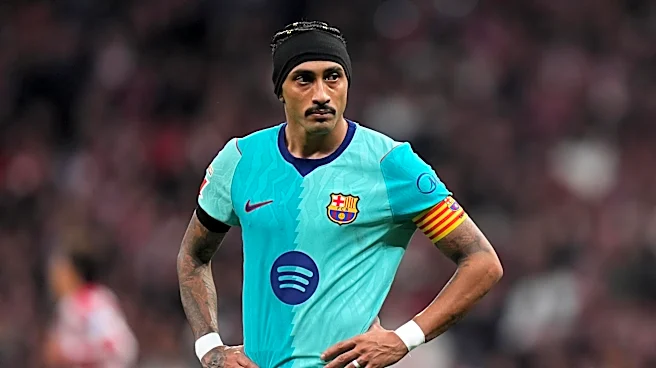
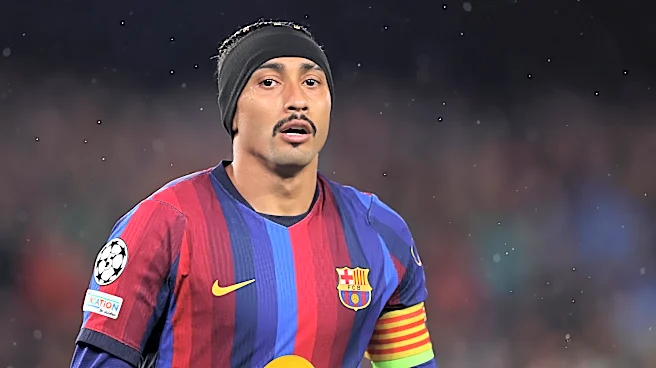
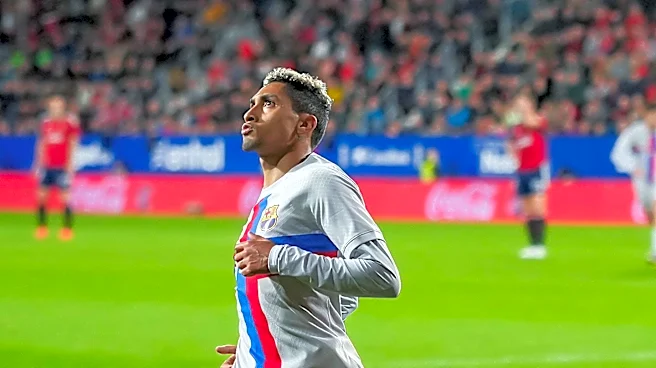
Barcelona forward Raphinha has publicly addressed criticism regarding his comments about managing his playing time with the Brazilian national team. Speaking at a press conference in Singapore, Raphinha became emotional as he clarified that his remarks
were misinterpreted and that representing Brazil has always been a top priority. He explained that his concerns stemmed from experiencing three injuries in the same leg area during his last three international call-ups. Raphinha emphasized his need to take care of his physical condition to remain available for both the national team and Barcelona, stating that he does not want to get injured again. He also mentioned that he would be the first to retire if he felt physically unable to perform at the required level.
Why It's Important?
This situation highlights the increasing pressure on elite footballers who balance demanding club schedules with international commitments. For players like Raphinha, frequent travel and intense match loads can lead to recurring injuries, impacting both their club and national team performance. The public's reaction to Raphinha's initial comments underscores the passionate expectations fans have for their national team players, often overlooking the physical toll on athletes. This incident also brings to light the delicate communication required from athletes when discussing personal health and professional obligations, as misinterpretations can quickly lead to public backlash and scrutiny. The player's emotional response indicates the personal strain these situations can cause.
What's Next?
Raphinha is expected to captain Brazil in their upcoming friendly against Japan, with plans to manage his workload across two friendlies to mitigate injury risks. This approach suggests a collaborative effort between the national team coaching staff and Barcelona to ensure the player's fitness. The ongoing dialogue between players, clubs, and national federations regarding player welfare and scheduling will likely continue, especially as international football calendars become more congested. Raphinha's performance in these upcoming matches and his continued availability for both club and country will be closely monitored, potentially influencing future discussions on player management.
Beyond the Headlines
The controversy surrounding Raphinha's comments touches upon broader issues within professional sports, including player autonomy, the commercialization of football, and the mental health of athletes. The expectation for players to always prioritize national team duties, even at personal physical cost, can create an environment where athletes feel compelled to push through injuries. This incident could spark further conversations about the need for greater understanding and empathy from fans and media regarding the physical and mental well-being of professional athletes. It also raises questions about the balance of power between clubs, which invest heavily in players, and national teams, which rely on those players for international competitions.