





What's Happening?
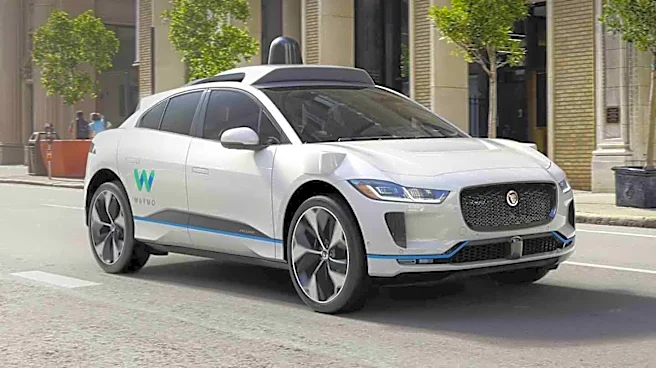
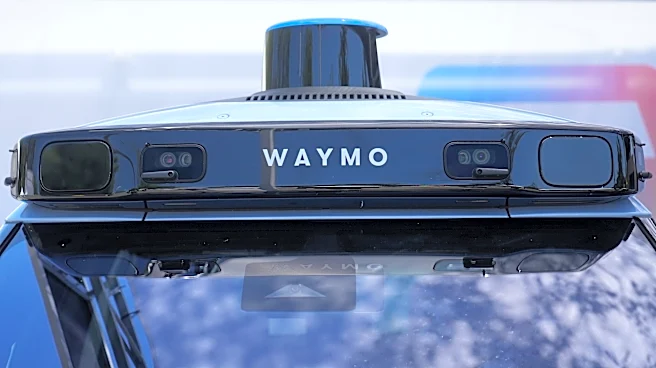
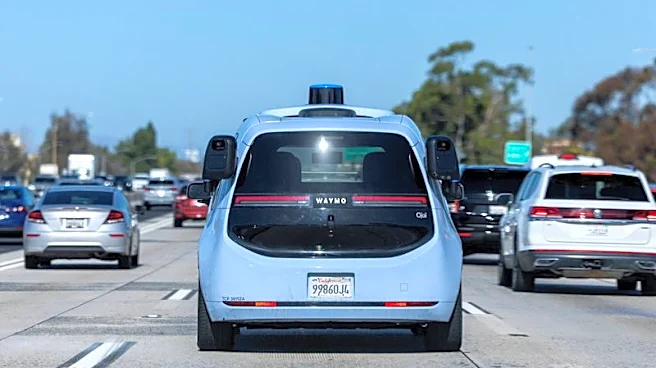
Self-driving taxi company Waymo has reportedly been banned from operating its autonomous vehicles on freeways in California. According to James Ward from Drive.com.au, these vehicles struggle to account for construction zones and police presence on freeways,
leading to the ban. This development comes as Waymo is reportedly considering Australia as a key market for international expansion. The ban in California highlights ongoing challenges for autonomous vehicle technology, particularly in complex and dynamic driving environments like freeways. While self-driving cars are advancing, their ability to interpret and react to unpredictable elements such as roadworks and emergency situations remains a significant hurdle for widespread adoption and regulatory approval in certain contexts.
Why It's Important?
The ban on self-driving taxis from California freeways signifies a critical setback for the autonomous vehicle industry in the U.S. California is often a bellwether for technological adoption and regulation, and this restriction could influence other states or even federal policy regarding autonomous vehicle deployment. It underscores the public safety concerns and technological limitations that still exist, potentially slowing down the broader rollout of driverless technology. For companies like Waymo, it means a significant portion of their operational capabilities in a key market is curtailed, impacting their business model and revenue streams. The pivot towards international markets like Australia suggests a strategy to find more receptive regulatory environments or less complex road networks to further develop and deploy their technology, while simultaneously addressing the challenges identified in the U.S.
What's Next?
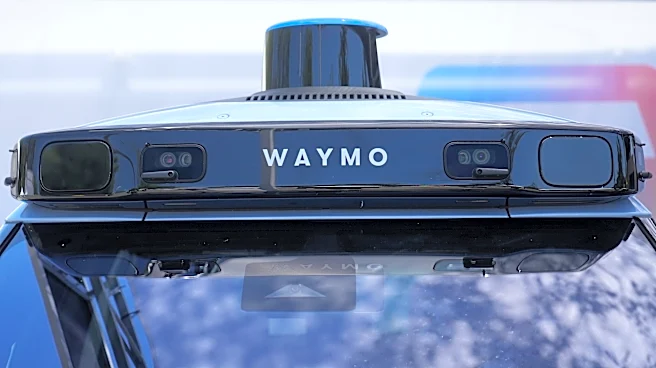
Waymo will likely need to address the specific issues that led to the California freeway ban, focusing on improving its autonomous driving systems' ability to detect and appropriately respond to construction zones and emergency personnel. This could involve further investment in sensor technology, AI algorithms, and mapping data. In the short term, Waymo's operations in California will be limited to non-freeway routes, potentially impacting service efficiency and customer reach. Internationally, if Waymo proceeds with expansion into Australia, it will face new regulatory frameworks and road conditions, requiring further adaptation and testing. The company's success in other markets could influence future regulatory decisions in the U.S., but significant technological advancements will be needed to regain full freeway access in California.
Beyond the Headlines
This development highlights the complex interplay between technological innovation, public safety, and regulatory oversight. While autonomous vehicles promise increased safety and efficiency, incidents like these reveal the inherent challenges in replicating human judgment and adaptability in unpredictable real-world scenarios. The ban could spark a broader debate about the appropriate scope and speed of autonomous vehicle deployment, pushing regulators to adopt more cautious approaches. It also raises questions about the liability framework in accidents involving self-driving cars, especially when they fail to react to common road hazards. The industry may need to shift its focus from rapid expansion to more rigorous testing and validation in diverse and challenging environments to build public trust and secure broader regulatory approval.