








What's Happening?
A new feature in fashion Content Management Systems (CMS) allows brands to create 'shoppable lookbooks.' This functionality enables managers to upload seasonal look photos and tag individual clothing pieces within these images. Each tag links directly
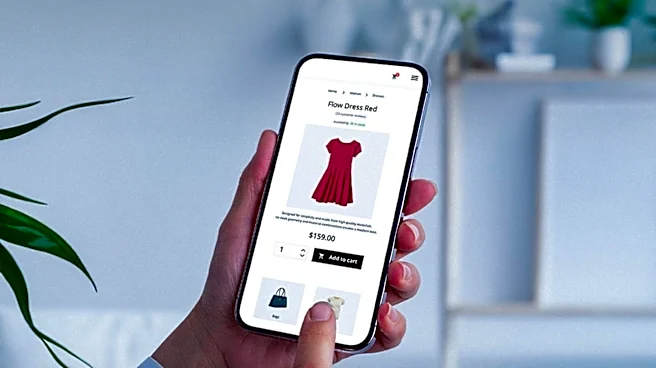
to the product catalog, providing shoppers with immediate access to product details, pricing, size options, and an 'Add to bag' button. This system transforms editorial content, such as seasonal shoots, into direct sales opportunities. When a shopper views a lookbook, they can tap on pulsing tags on items like coats, trousers, bags, and shoes to view a mini product card and add items to their cart without leaving the lookbook page. The system also includes a 'Full look' button that lists all pieces in the shot, indicating what has already been added to the bag and what can still be purchased. Prices and stock information are dynamically pulled from the product catalog, ensuring accuracy and eliminating issues with outdated information.
Why It's Important?
This development is significant for the U.S. fashion retail industry as it directly addresses a common challenge: bridging the gap between inspirational editorial content and direct purchasing. Traditionally, fashion shoots, despite their high investment in styling, photography, and models, often existed separately from the e-commerce store, requiring customers to search for desired items. By integrating shoppable tags, brands can convert customer inspiration into immediate sales, potentially increasing conversion rates and average order values. Shoppers are more likely to add multiple items from a curated look, such as a coat, trousers, and accessories, when they are easily accessible. This seamless shopping experience reduces friction in the customer journey, making it easier for consumers to act on their purchasing impulses. Furthermore, the dynamic linking to the product catalog ensures that pricing and stock levels are always current, preventing customer disappointment and improving overall satisfaction.
What's Next?
The adoption of shoppable lookbooks is expected to become a standard practice for fashion brands utilizing advanced CMS platforms. Brands will likely focus on optimizing their lookbook content to maximize engagement and sales, potentially integrating these features with social media campaigns and email marketing to drive traffic directly to shoppable editorial pages. The continuous evolution of these tools may include more personalized lookbook recommendations based on shopper preferences and purchase history. Additionally, there could be further integration with augmented reality (AR) features, allowing customers to virtually 'try on' items from the lookbook. The success of these shoppable lookbooks will likely lead to increased investment in high-quality editorial content that is designed from the outset to be interactive and conversion-focused, further blurring the lines between content and commerce in the digital fashion landscape.
Beyond the Headlines
The introduction of shoppable lookbooks represents a broader shift in digital retail towards more immersive and integrated shopping experiences. This trend moves beyond simple product listings to create a narrative-driven commerce environment where inspiration and transaction are intertwined. Ethically, this approach could lead to more sophisticated forms of consumer engagement, but also raises questions about the potential for increased impulse buying. From a technological standpoint, it highlights the growing importance of robust CMS capabilities that can handle complex data integrations and provide dynamic content delivery. Culturally, it reflects how consumers increasingly expect instant gratification and seamless transitions between discovery and purchase, pushing brands to innovate their online presence. This evolution could also influence how fashion content creators and stylists approach their work, emphasizing the commercial viability of their artistic output.