


What's Happening?
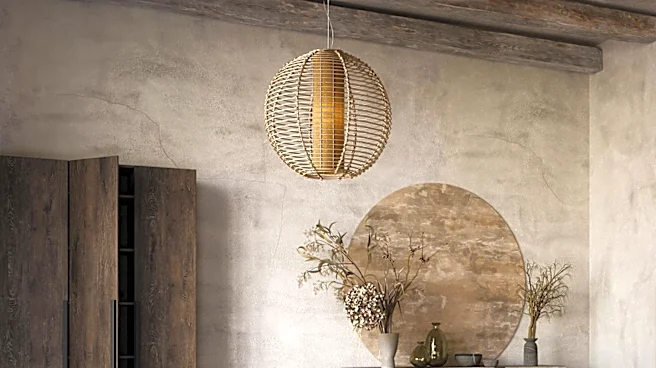
Japanese pendant lights are becoming a staple in contemporary interior design, characterized by their understated geometry, natural materials, and diffused illumination. These lights embody the wabi-sabi aesthetic, which has moved beyond a trend to become
a foundational design language. They are particularly effective in open-plan spaces, providing visual softness without compromising functionality. The use of materials like rice paper and untreated wood enhances the aesthetic appeal while maintaining energy efficiency. These lights are compatible with modern lighting systems, offering dimming functionality and high color rendering, making them suitable for both residential and commercial projects.
Why It's Important?
The integration of Japanese pendant lights into contemporary design reflects a broader shift towards minimalist and intentional interiors. This trend is significant as it aligns with the increasing demand for sustainable and energy-efficient design solutions. By embracing the wabi-sabi aesthetic, designers and architects can create spaces that are both functional and visually appealing, meeting the needs of modern consumers who value simplicity and authenticity. This approach also supports the growing emphasis on creating environments that promote well-being and mindfulness, which is becoming a priority in both residential and commercial settings.