
What's Happening?
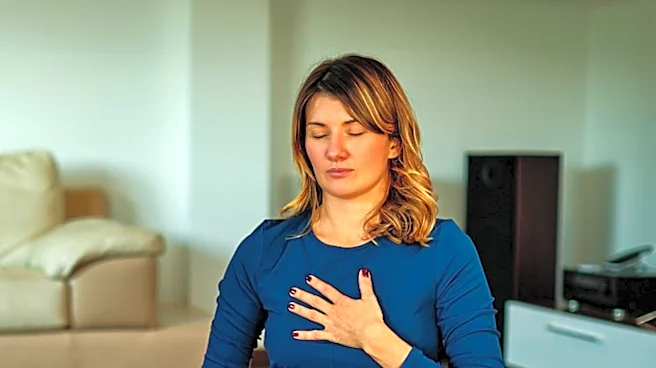
Breathwork, a practice involving specific breathing techniques, is gaining recognition for its role in promoting physical, mental, and spiritual well-being. This practice encompasses various methods, including
diaphragmatic breathing, paced breathing, and humming-based techniques, often guided by soothing sounds like gongs and singing bowls. It is being utilized to ease tension, encourage mental clarity, and support healing. The immediate and trainable nature of breath makes it a practical tool for managing stress and depression, offering an embodied and repeatable form of support. While beneficial for both beginners and experienced practitioners, proper facilitation and awareness are crucial to avoid potential negative effects. Techniques such as the Cyclical Sigh have demonstrated effectiveness in reducing physiological arousal and improving mood, underscoring breathwork's potential in stress management.
Why It's Important?
The increasing adoption of breathwork practices highlights a growing societal emphasis on accessible and immediate self-regulation tools for mental health. In a fast-paced U.S. society, where stress and mental health challenges are prevalent, breathwork offers a non-pharmacological approach that individuals can integrate into their daily lives. This is particularly important for those seeking alternatives or complements to traditional therapies. The ability of breathwork to provide immediate, embodied, and repeatable support means it can empower individuals to manage their emotional states proactively. For the healthcare industry, this trend could lead to increased demand for certified breathwork facilitators and integration of these practices into wellness programs. Furthermore, the emphasis on proper facilitation and awareness underscores the need for standardized training and ethical guidelines within the burgeoning wellness sector, ensuring safe and effective application for a broad public.
What's Next?
As awareness and scientific understanding of breathwork grow, it is likely to see further integration into mainstream wellness and mental health programs. Research into specific breathwork techniques, such as the Cyclical Sigh, will continue to validate their physiological and psychological benefits, potentially leading to broader acceptance by medical professionals. There may be an increase in demand for certified breathwork practitioners and the development of more structured training programs to ensure safe and effective delivery of these practices. Additionally, technology could play a larger role, with more apps and digital platforms offering guided breathwork sessions, making these techniques even more accessible to the public. The focus will remain on gentle, repeatable methods that empower individuals to build a sustainable relationship with their breath for long-term well-being.
Beyond the Headlines
Beyond its immediate benefits for stress and mood, breathwork taps into deeper ethical and cultural dimensions. Many breathwork practices have roots in ancient traditions, such as pranayama, emphasizing the connection between breath, body, and spirit. As these practices become more widely adopted in Western contexts, there is a critical need for cultural respect and proper attribution to their origins. This involves acknowledging the lineages from which these techniques derive, rather than reducing them to mere 'breath hacks.' The ethical implications extend to ensuring that practitioners are adequately trained and that clients are screened appropriately, especially those with trauma histories or fragile mental states, to prevent destabilization. The long-term shift could involve a more holistic understanding of health, where the breath is recognized not just as a physiological function but as a powerful tool for self-regulation and spiritual connection, fostering a more integrated approach to well-being in society.