






What's Happening?
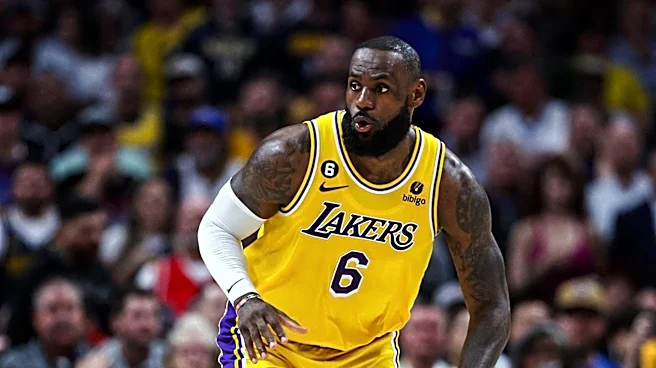
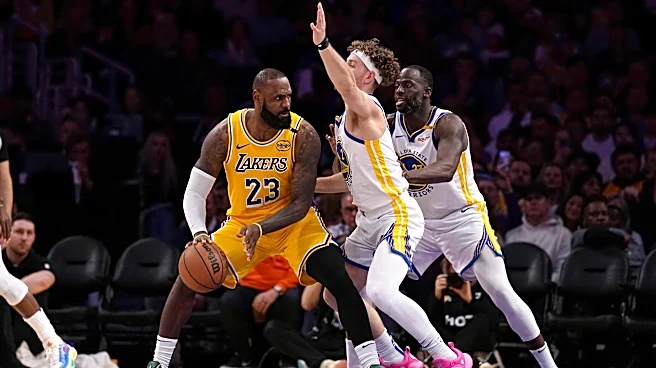
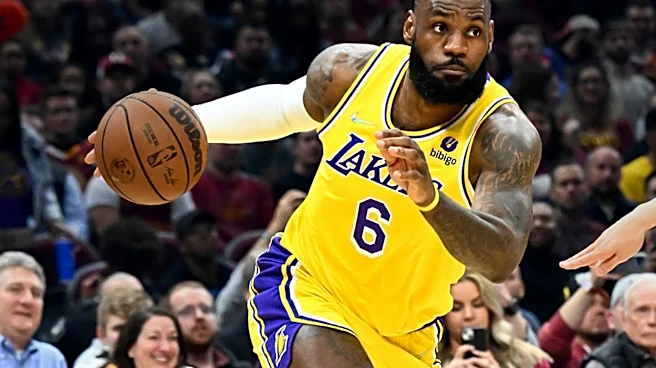
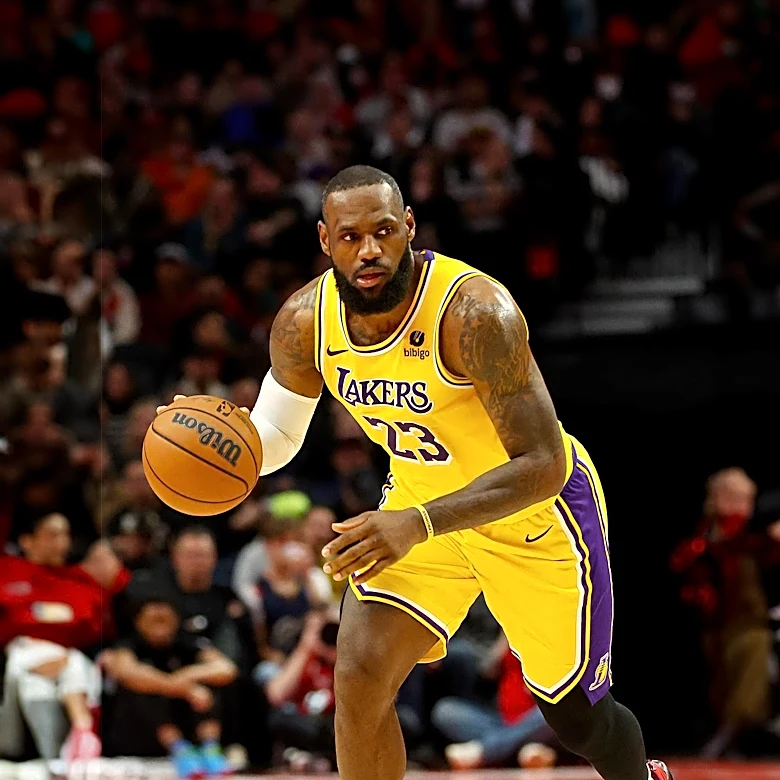
The Minnesota Timberwolves have emerged as a contender in the race to sign LeBron James, following his decision to leave the Los Angeles Lakers. James, a four-time NBA champion, has informed the Lakers of his intention to play for another team in the 2026/27
season. The Timberwolves, led by Anthony Edwards, are reportedly making a strong case to attract James by highlighting their solid defensive structure and playoff potential. Despite their interest, the Timberwolves face significant financial constraints under the NBA's salary cap rules, which could complicate their ability to offer James a competitive contract. The Timberwolves' pursuit of James is part of a broader strategy to enhance their competitiveness in the Western Conference.
Why It's Important?
LeBron James's decision to leave the Lakers has significant implications for the NBA landscape. His potential move to the Timberwolves could elevate the team's status as a title contender, given James's experience and leadership. For Minnesota, acquiring James would not only boost their on-court performance but also enhance their marketability and appeal to sponsors and fans. However, the financial challenges posed by the NBA's salary cap could limit the Timberwolves' ability to sign James without making significant roster adjustments. This situation underscores the complexities teams face in balancing competitive aspirations with financial realities.
What's Next?
The Timberwolves will need to navigate the NBA's financial regulations carefully to create a viable offer for LeBron James. This may involve negotiating player trades or salary adjustments to fit James's contract within their budget. Meanwhile, James's decision will likely influence other teams' strategies in the free agency market, as they assess their own opportunities to sign the veteran player. The outcome of these negotiations will have a ripple effect across the league, impacting team dynamics and competitive balance in the upcoming season.