





What's Happening?
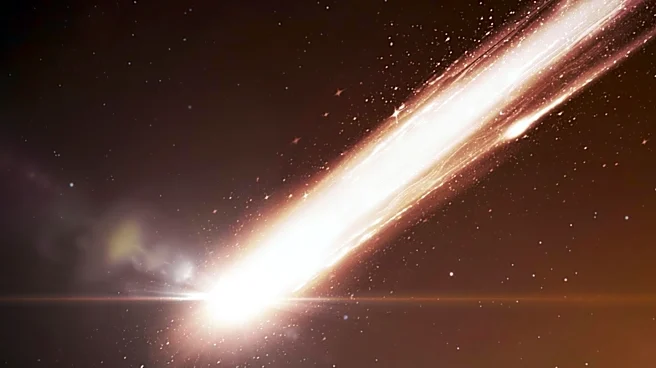
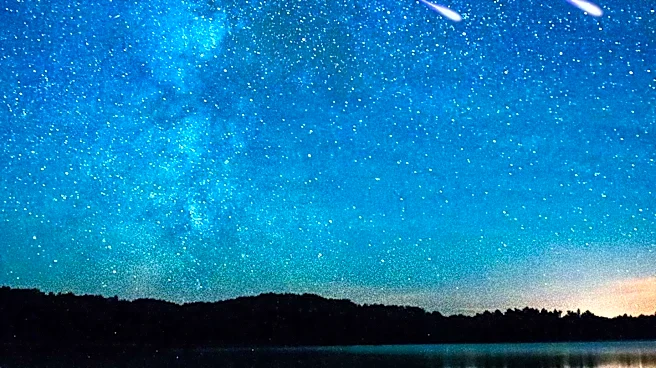
July offers a series of celestial events, including the Buck Moon on July 29, three meteor showers, and several planetary conjunctions. The Buck Moon, named for the time when male deer grow new antlers, will coincide with the Alpha Capricornids and Southern
Delta Aquariids meteor showers. However, the full moon's brightness may obscure these meteor showers. Additionally, Earth will reach aphelion, its farthest point from the sun, on July 6. Throughout the month, stargazers can also observe the Summer Triangle and the Teapot constellation, as well as conjunctions involving Mars, Uranus, Saturn, and Venus.
Why It's Important?
These celestial events provide opportunities for public engagement with astronomy and science education. Observing such phenomena can inspire interest in space and science, fostering a greater appreciation for the natural world. The events also highlight the importance of preserving dark skies, as light pollution can hinder the visibility of these astronomical occurrences. For amateur astronomers and enthusiasts, these events offer a chance to observe and document rare alignments and meteor showers, contributing to citizen science initiatives.
What's Next?
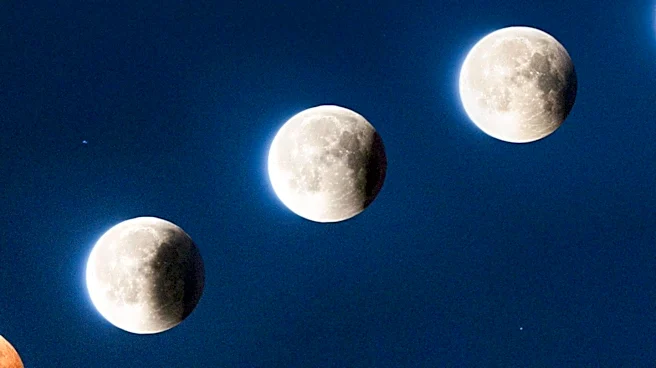
Following July's events, August will feature both a total solar eclipse and a partial lunar eclipse. While the solar eclipse will not be visible in Florida, it will be observable in parts of the Northeast and Alaska. The partial lunar eclipse will be visible in Florida, offering another opportunity for public engagement and observation. These upcoming events may prompt educational institutions and astronomy clubs to organize viewing parties and educational sessions to enhance public understanding of eclipses and their significance.
Beyond the Headlines
The occurrence of these celestial events underscores the interconnectedness of Earth's position in the solar system and its impact on natural phenomena. Understanding these events can provide insights into broader scientific concepts such as orbital mechanics and the Earth's relationship with the sun and moon. Additionally, these events can serve as a reminder of the cultural and historical significance of celestial observations, which have been used for navigation, agriculture, and timekeeping throughout human history.