









What's Happening?
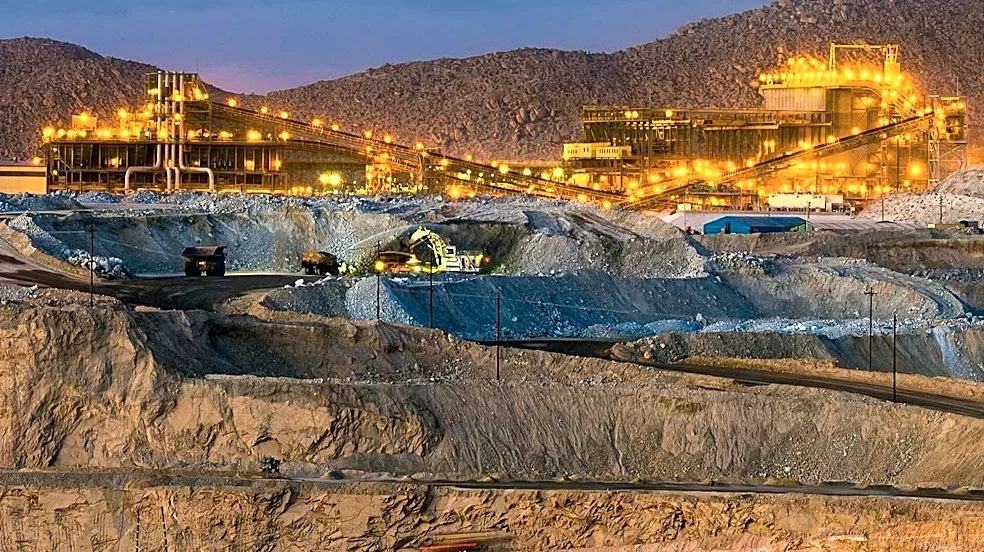
Freeport-McMoRan, a major copper producer, has developed a new chemical compound aimed at significantly increasing copper extraction from mine waste tailings. The company has spent three years testing various chemical cocktails to improve leaching efficiency
from piles containing over 40 billion pounds of copper. This new compound, when combined with heat, could boost copper recovery by at least a factor of three, according to CEO Kathleen Quirk. Field tests are scheduled for later this year to validate these expectations. The initiative is part of Freeport-McMoRan's strategy to extract 800 million pounds of copper annually from waste rock, expanding production beyond traditional mining methods to meet rising global demand. Last year, the company leached 214 million pounds of copper, which helped offset declines in traditional mine production, though this amount has not yet fully satisfied investors. The company's stock has seen a nearly 40% increase this year due to rising copper prices.
Why It's Important?
This development is significant for Freeport-McMoRan and the broader copper industry as it addresses the growing demand for copper, a critical metal for electrification and digital infrastructure. By enhancing extraction from waste rock, the company can access substantial reserves without the need for new permits or smelters, and at a lower cost than traditional hard-rock mining. This innovation could provide a more sustainable and cost-effective way to increase copper supply, which is crucial given the tightening global supply picture and the long lead times for new mine development. Success in these field tests could position Freeport-McMoRan as a leader in sustainable mining practices, potentially influencing other companies to invest in similar technologies. For investors, demonstrating increased production through these initiatives could alleviate skepticism and further boost the company's market valuation, especially as copper prices remain high.
What's Next?
Freeport-McMoRan plans to conduct field tests of the new chemical compound later this year. The results of these tests will be crucial in determining the compound's effectiveness and scalability. CEO Kathleen Quirk indicated that the company will have a clearer understanding of the timing for achieving its 800 million pounds per year leaching target as they progress through 2027. If the field tests are successful, Freeport-McMoRan will likely accelerate the deployment of this technology across its operations, potentially reaching its ambitious production goals within a few years. The company also continues to focus on expansions in Arizona and Chile, alongside the recovery of its Grasberg mine in Indonesia, which is expected to resume full production by the end of 2027. These combined efforts are central to Freeport-McMoRan's growth strategy, with acquisitions not being a primary focus at this time.
Beyond the Headlines
The development of this new leaching compound highlights a broader industry trend towards technological innovation in mining to address resource scarcity and environmental concerns. Extracting copper from waste tailings not only increases supply but also reduces the environmental footprint associated with mining by repurposing materials that were once considered waste. This approach aligns with circular economy principles, offering a more sustainable model for resource extraction. Furthermore, the success of such technologies could mitigate geopolitical risks associated with sourcing critical minerals, as companies can leverage existing domestic waste piles. This innovation could also spur further research and development in hydrometallurgy and chemical engineering within the mining sector, leading to more efficient and environmentally friendly methods for extracting other valuable metals from low-grade ores and waste materials.