



What's Happening?
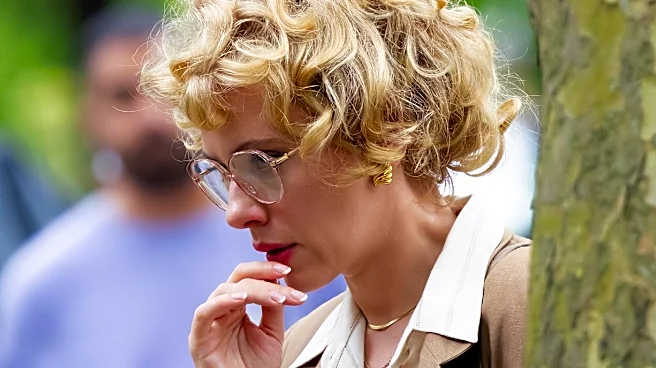
In the summer of 2004, Scarlett Johansson, then 19, accepted a last-minute role in a film directed by Woody Allen, a collaboration that has since become the most contentious of her career. Johansson stepped in a week before filming was set to begin for Allen's
psychological thriller 'Match Point,' replacing Kate Winslet who dropped out due to personal reasons. Despite the controversies surrounding Woody Allen, Johansson has consistently defended him, a stance that has drawn criticism and raised eyebrows. She expressed her satisfaction with working for him, stating, 'I would work for him forever and be completely satisfied.' Johansson and Allen subsequently collaborated on two more films, 'Scoop' and 'Vicky Cristina Barcelona.' Her ongoing support for Allen distinguishes her from many other collaborators who have since distanced themselves from the filmmaker.
Why It's Important?
This situation highlights the complex ethical considerations actors face when collaborating with figures embroiled in public controversy. Johansson's continued defense of Woody Allen, despite widespread criticism and his 'persona non grata' status in mainstream Hollywood, positions her as a notable outlier. This stance can impact her public image and potentially influence audience perception of her work, creating a divide among fans and industry peers. The controversy also underscores the broader debate within the entertainment industry regarding accountability, artistic freedom, and the separation of an artist's work from their personal conduct. For Johansson, this decision has been a defining aspect of her career narrative outside of her acting roles, inviting ongoing scrutiny and discussion about her personal values and professional choices.
What's Next?
Given the enduring nature of the controversies surrounding Woody Allen, Scarlett Johansson's past and continued support for him will likely remain a recurring topic in discussions about her career. While she has not made a film with Allen since 'Vicky Cristina Barcelona,' her previous statements continue to be referenced. Any future public comments she makes on the matter will likely be met with renewed media attention and public debate. The entertainment industry's evolving standards regarding ethical conduct and accountability mean that actors' past associations are increasingly scrutinized, potentially influencing casting decisions, public relations strategies, and overall career trajectories. Johansson's ability to navigate these discussions while maintaining her prominent career will be a continuous challenge.
Beyond the Headlines
The controversy surrounding Scarlett Johansson's collaboration with Woody Allen delves into deeper questions about cancel culture, artistic legacy, and the power dynamics within Hollywood. It forces a re-evaluation of how society and the industry should weigh an artist's creative contributions against allegations of personal misconduct. Johansson's unwavering support, in contrast to many who have recanted their praise, highlights the varied responses to such situations and the personal convictions that drive them. This ongoing debate reflects a cultural shift where audiences and industry professionals are increasingly demanding moral alignment from public figures, blurring the lines between personal and professional lives. It also raises questions about the long-term impact of such controversies on an artist's historical standing and the potential for their work to be re-contextualized through a different ethical lens.