






What's Happening?
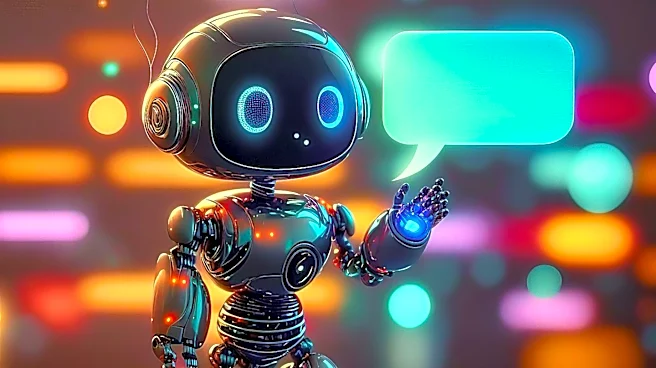
Hyper-realistic chatbots are increasingly being deployed across various sectors, including customer support, adult entertainment, and the broader entertainment industry. In customer support, AI chatbots are being enhanced with advanced rendering capabilities
to create more immersive and effective interactions. Platforms like SpicyChat are utilizing hyper-realistic AI to develop intricate narratives and character dialogues within adult entertainment. The entertainment industry is also adopting hyper-realistic AI simulations of celebrities for virtual concert tours and interactive fan engagement. These digital doppelgangers, powered by sophisticated generative AI, are blurring the lines between human authenticity and algorithmic creation, raising complex questions about identity and consent. This technology allows for virtual concert tours featuring synthesized versions of iconic performers and interactive chatbots that simulate celebrity personalities for fan engagement. Some entertainment companies are even creating 'digital twins' for living celebrities to maintain a presence and reduce their workload, appearing in advertisements, conducting interviews, or performing virtually when the human celebrity is unavailable.
Why It's Important?
The widespread adoption of hyper-realistic AI chatbots has significant implications for various U.S. industries. In customer support, it promises enhanced efficiency and user experience, potentially reducing operational costs for businesses. For the adult entertainment sector, it introduces new forms of interactive content, expanding market offerings and engagement models. The entertainment industry faces a profound transformation, as AI-generated celebrities challenge traditional notions of stardom, performance, and intellectual property. This technology could democratize access to 'star power' by reducing production costs for content featuring famous personalities, benefiting smaller productions. However, it also poses a threat to human performers, who may see reduced opportunities as companies increasingly opt for reliable, always-available digital alternatives. The ethical and legal frameworks surrounding consent, authenticity, and the use of likeness, particularly for deceased individuals, are being severely tested, creating a 'wild west scenario' where existing regulations struggle to keep pace with technological advancements.
What's Next?
The rapid advancement of hyper-realistic AI celebrity technology necessitates the development of new ethical guidelines and legal frameworks. Stakeholders across the entertainment industry are calling for thoughtful regulations to govern its development and deployment. Initiatives are underway to draft best practices for the ethical creation and use of AI celebrity simulations, and legislative proposals aim to establish clear consent requirements and posthumous usage rights. Technical standards for watermarking and labeling AI-generated content are also being developed to ensure transparency. Educational programs are being implemented to help creators and consumers understand the capabilities and limitations of these technologies. The goal is to balance innovation with societal values and individual rights, ensuring that technological progress enhances rather than diminishes the cultural landscape. The coming decade will likely see continued debate and efforts to define the boundaries of AI's role in entertainment and other sectors.
Beyond the Headlines
The emergence of hyper-realistic AI chatbots and celebrity simulations delves into deeper ethical and cultural dimensions. The question of consent becomes paramount, especially concerning the unauthorized use of likeness for living individuals and the challenging of traditional notions of legacy and autonomy for deceased performers. The potential for misuse is substantial, with risks of malicious actors creating convincing political endorsements or promotional content without permission, leading to reputational damage or the spread of disinformation. The line between parody and fraud becomes increasingly blurred as the technology improves. Furthermore, there are concerns about the psychological impact on fans who may form parasocial relationships with these digital entities, potentially developing attachments to simulations that lack genuine human experience or accountability. This technology forces a re-evaluation of what constitutes 'authenticity' and 'identity' in an increasingly digital world, prompting a societal discussion on the long-term implications of blurring the lines between human and artificial existence.