





What's Happening?
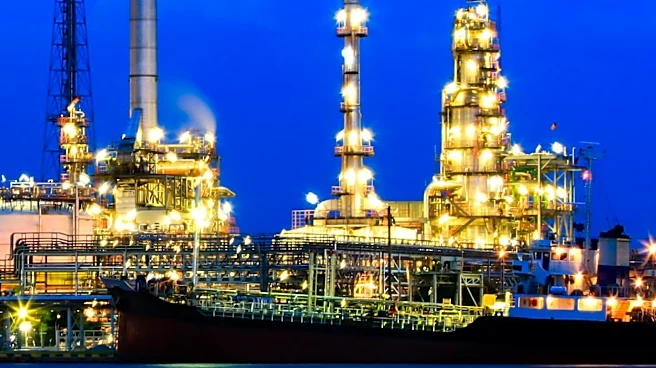
China has rapidly depleted its petrochemical stockpiles, which were an unintended result of years of domestic overproduction. This depletion, estimated at 95% of 2025 inventories by October 2026, is largely attributed to the US-Iran war disrupting Persian
Gulf oil and naphtha flows. Iranian crude, a key input for many Chinese private refiners, has ceased due to a US blockade. Naphtha exports from the region remain constrained, even as some broader energy flows have partially recovered. Beijing's policy response further exacerbated the issue by prioritizing gasoline and diesel output, compelling refiners to draw down petrochemical stockpiles instead of dedicating refinery capacity to chemical production. This decision, made for energy security, accelerated the inventory depletion. The scarcity is particularly affecting aromatics, rubber, resins, and plastics, leading to rising wholesale prices.
Why It's Important?
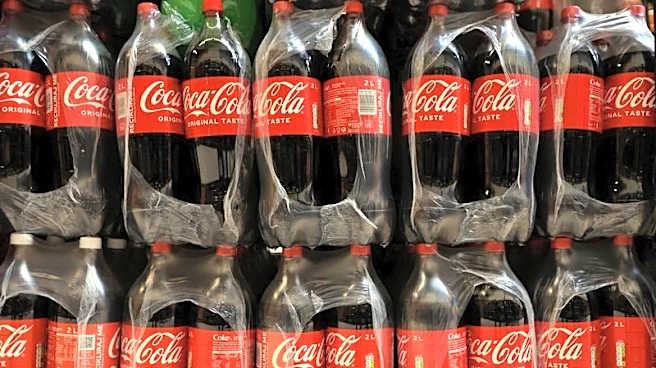
The depletion of China's petrochemical stockpiles has significant implications for global industrial supply chains and inflation. China is a major supplier of petrochemicals and downstream products, meaning that rising wholesale prices in China are likely to be exported globally. Manufacturers worldwide who rely on Chinese chemicals or finished goods are already experiencing higher input costs. This situation could lead to increased prices for a wide range of products, from car tires and electrical insulation to plastic bottles and paints. While the current price increases are seen as a repricing of a tight market rather than a speculative spike, they contribute to inflationary pressures on consumers globally. The reliance on Persian Gulf feedstock highlights the vulnerability of global supply chains to geopolitical conflicts and the strategic decisions made by major economies regarding energy security.
What's Next?
Analysts anticipate continued weak, range-bound fluctuations in prices, with a potential for external market bullish catalysts. However, any significant domestic market rally will face resistance due to underlying overcapacity. The current inventory crunch is considered temporary, as structural overcapacity in China's petrochemical sector still exists. Once feedstock flows normalize and profit margins improve enough to justify higher operating rates, the structural surplus could quickly reassert itself. New production capacity is also expected to come online, with BloombergNEF projecting a record increase of nearly 21 million metric tons of new global polyethylene manufacturing capacity. For the immediate future, businesses sourcing aromatics, rubber, resins, or plastics should expect to pay higher prices.
Beyond the Headlines
This situation underscores the complex interplay between geopolitical events, national energy policies, and global economic stability. The US-Iran war, while geographically distant from China, has had a profound and immediate impact on its industrial sector, demonstrating the interconnectedness of the global economy. China's decision to prioritize fuel production over petrochemicals, while logical from an energy security perspective, reveals a trade-off that has significant consequences for its manufacturing base and global supply chains. The 'accidental' nature of China's previous petrochemical surplus highlights how unforeseen buffers can mitigate shocks, and their absence can amplify them. This event could prompt a re-evaluation of supply chain resilience and the strategic importance of diverse feedstock sources for industrial nations.