






What's Happening?
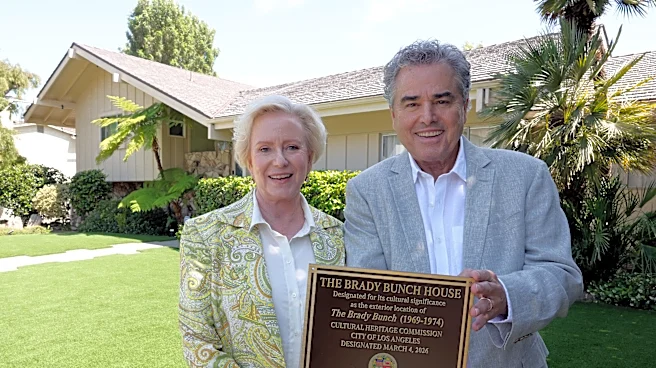
Eve Plumb, known for her role as Jan Brady in 'The Brady Bunch,' is advising aspiring young actors against seeking fame. During a November 14 episode of the 'Facts Verse' podcast, Plumb stated that while pursuing acting for good work and interesting parts
is valid, fame itself is not desirable. She emphasized that once famous, individuals cannot revert to anonymity, as their public image, whether positive or negative, becomes permanent. Plumb reiterated similar sentiments in a May interview with Fox News Digital, highlighting the importance of an actor's ability to decline roles and set boundaries. She expressed hope that young actors would have protective parents, like her own, who safeguarded their finances and shielded them from suspicious situations. Plumb, who played Jan Brady from 1969 to 1974, also revealed in her memoir, 'Happiness Included: Jan Brady and Beyond,' that she and her co-stars do not receive residual payments from the series reruns.
Why It's Important?
Plumb's warning is significant for the entertainment industry, particularly for child actors and their families, as it sheds light on the often-unseen downsides of early fame. Her perspective, stemming from personal experience as a child star, offers a cautionary tale about the lasting impact of public recognition and the loss of privacy. This advice could influence how parents and guardians of young talent approach career decisions, potentially prioritizing mental well-being and personal development over immediate stardom. Furthermore, her comments about the lack of residual payments for 'The Brady Bunch' reruns highlight ongoing issues within the industry regarding fair compensation for actors, especially from older television productions, which can spark discussions about artists' rights and intellectual property in the age of streaming and perpetual syndication.
What's Next?
Plumb's statements may prompt further discussions within acting schools, talent agencies, and parental groups about the comprehensive preparation needed for young performers, extending beyond acting skills to include psychological readiness for fame. It could also reignite conversations about industry standards for child actors, including support systems and financial protections. The issue of residual payments, brought to light by Plumb's memoir, might contribute to ongoing debates and potential advocacy efforts by actors' unions and guilds to secure more equitable compensation for performers, especially for shows that continue to generate revenue through reruns and streaming. Young actors and their families might increasingly seek advice from veterans like Plumb, leading to a more informed approach to navigating the complexities of the entertainment world.
Beyond the Headlines
Beyond the immediate advice, Plumb's reflections touch upon deeper societal perceptions of fame and success. Her message challenges the prevalent cultural narrative that equates fame with ultimate achievement and happiness, suggesting instead that it can be a burden. This perspective encourages a re-evaluation of what constitutes a fulfilling career in the arts, emphasizing craft and artistic integrity over celebrity status. Ethically, it raises questions about the responsibility of the entertainment industry to protect its youngest talents from the psychological pressures of public life. Legally, the lack of residuals for a show as iconic as 'The Brady Bunch' underscores the evolving nature of intellectual property rights and compensation models in media, prompting a look into how past contracts may not adequately address current distribution methods, potentially leading to future legal challenges or legislative changes to protect artists' long-term financial interests.