






What's Happening?
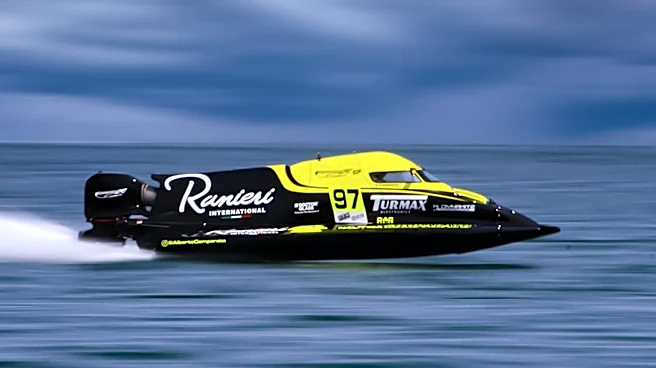
Didier Pironi, a former Formula 1 driver for Tyrrell, Ligier, and Ferrari, died on August 23, 1987, in a powerboat racing accident near the Isle of Wight in the English Channel. Pironi, who raced in F1 from 1978 to 1982, had three Grand Prix victories,
most notably at the 1982 San Marino Grand Prix where he controversially overtook his teammate Gilles Villeneuve. His F1 career ended prematurely due to a severe accident during practice for the 1982 German Grand Prix, which left him with multiple leg fractures. After his F1 career concluded, Pironi transitioned to powerboat racing, where he achieved some success. The fatal accident occurred when his boat, Colibri 4, carrying a three-person crew including Ligier engineer Jean-Claude Guénard and navigator Bernard Giroux, hit a wave from a tanker, became airborne, and capsized. All three crew members perished in the incident.
Why It's Important?
Pironi's death marked a tragic end to the life of a talented but controversial figure in motorsport. His career was defined by both his driving skill and the contentious incident with Gilles Villeneuve, which many believe contributed to Villeneuve's fatal accident shortly after. The powerboat accident itself was significant as it was the first in that class of racing to claim more than two lives, prompting extensive investigations into the incident. His story highlights the inherent dangers across various forms of motorsport and the personal toll that high-stakes competition can take on individuals. The incident also brought attention to safety protocols in powerboat racing, similar to how F1 continually evolves its safety standards following major accidents.
What's Next?
While Pironi's death occurred decades ago, his legacy continues to be discussed within motorsport circles, particularly regarding the 1982 F1 season and the circumstances surrounding his rivalry with Villeneuve. The investigations into the powerboat accident did not conclusively pinpoint a specific technical failure or driver error, leaving some questions unanswered about the exact cause. However, such incidents often lead to ongoing reviews of safety regulations in extreme sports. For the broader motorsport community, Pironi's story serves as a historical reminder of the risks involved and the constant need for safety advancements, even as technology and regulations evolve.
Beyond the Headlines
Beyond the immediate tragedy, Pironi's story delves into deeper psychological aspects of competitive sports. Reports indicate he suffered from deep depression after his F1 career-ending accident, which some close to him, like John Hogan, suggested influenced his 'suicidal' driving style in powerboats. This raises questions about the mental health support available to athletes facing career-altering injuries and the psychological pressures of high-performance sports. His narrative also touches on the ethical dilemmas within team sports, particularly the concept of team orders versus individual ambition, as seen in the Villeneuve incident. The enduring debate over whether he betrayed Villeneuve or simply outdrove him reflects the complex dynamics of competition at the highest level.