




What's Happening?
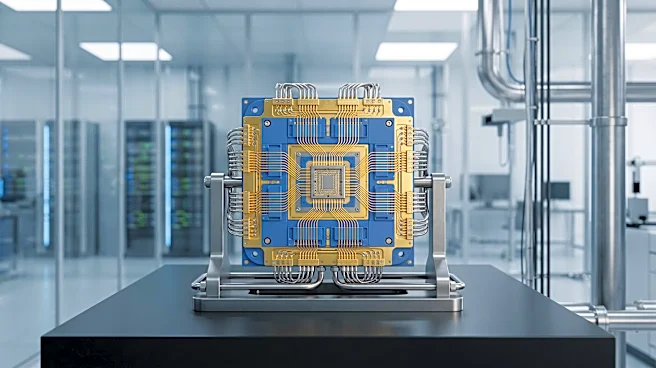
Quantum X Labs Inc. has published its updated execution roadmap for building a cold-atom quantum computer, targeting fault-tolerant computing by 2030. The roadmap details planned progression from its current physical-qubit platform towards error-corrected
and ultimately fault-tolerant quantum computing. Key milestones are defined by physical qubits, logical qubits, and gate performance, rather than just raw physical-qubit counts, which the company believes are crucial metrics for commercial viability. In 2026, Quantum X Labs achieved over 50 physical qubits on its cold-atom platform. The company's AI-based decoder for quantum error correction recently demonstrated the lowest logical error rates in benchmarks against other decoders on Google's surface-code hardware dataset and surface-code simulations, using NVIDIA CUDA-Q QEC as the test environment. The company plans to integrate its patent-pending deep transformer decoder, an AI-based error-correction system, with its cold-atom control stack to scale from physical to logical qubits.
Why It's Important?
This roadmap signifies a structured approach to overcoming one of the most significant hurdles in quantum computing: error correction. Achieving fault-tolerant quantum computing is essential for practical, large-scale applications, as current quantum systems are prone to errors. By setting clear, measurable targets for logical qubits and gate performance, Quantum X Labs aims to demonstrate tangible progress towards commercially useful quantum computers. The integration of AI for error correction is a critical innovation, leveraging classical computing strengths to enhance quantum performance. This development could accelerate the timeline for quantum computers to address complex problems in various sectors, including drug discovery, materials science, and cryptography, which are currently beyond the capabilities of even the most powerful supercomputers. The focus on cold-atom technology also highlights the diversity of approaches in the quantum computing landscape.
What's Next?
Quantum X Labs aims to achieve up to 20 logical qubits and over 1,000 physical qubits by 2027, followed by approximately 100 logical qubits and over 10,000 physical qubits with 99.9% gate performance by 2029. The ultimate goal for 2030 is full fault-tolerant scale-up with around 800 logical qubits and over 100,000 physical qubits, boasting a gate performance of 99.999999%. The company intends to report its progress against these milestones in periodic filings with the SEC and press releases. The success of this roadmap will depend on continued scientific and engineering breakthroughs, sufficient funding, and the ability to recruit and retain qualified personnel. The broader quantum computing community will closely watch these developments as they contribute to the global race for practical quantum applications.
Beyond the Headlines
The emphasis on 'logical qubits' over 'physical qubits' in the roadmap reflects a maturing understanding within the quantum computing community. While physical qubit count is a basic measure, logical qubits, which are error-corrected and more stable, are the true indicators of a quantum computer's practical utility. This shift in focus highlights the increasing importance of quantum error correction as the primary challenge. The use of AI in decoding and correcting errors also points to the growing synergy between artificial intelligence and quantum computing, where AI can optimize and manage the complex operations of quantum systems. This interdisciplinary approach is crucial for unlocking the full potential of quantum technology and could lead to entirely new computational paradigms that combine the strengths of both fields.