



What's Happening?
Daniel Humm, the owner of Eleven Madison Park, has introduced a new line of boxed pasta and noodle kits called Riff. This venture aims to upgrade the traditional concept of boxed macaroni and cheese by offering thoughtfully designed kits intended to simplify
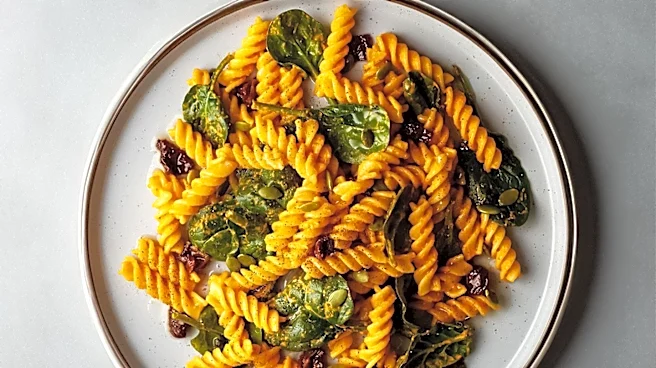
cooking. Riff is currently available exclusively at Target. The product line includes varieties such as creamy parmesan cavatappi and spicy tomato rigatoni. Humm's involvement marks a notable shift for a chef renowned for fine dining, as Riff positions itself within the growing market of chef-backed consumer packaged goods (CPG). The brand's packaging, designed by Center, reflects a sophisticated aesthetic, distinguishing it from conventional grocery store offerings. The initiative follows a trend of established culinary figures entering the retail food sector, seeking to apply a 'cheffy makeover' to everyday staples.
Why It's Important?
The launch of Riff by a high-profile chef like Daniel Humm signifies a broader trend in the U.S. food industry: the premiumization of convenience foods. This move could influence consumer expectations for quality and ingredients in readily available meal solutions, potentially driving innovation across the boxed meal segment. For the CPG market, Humm's entry, especially through a major retailer like Target, highlights the increasing appeal of celebrity chef endorsements and sophisticated branding to capture market share. It suggests that consumers are willing to pay more for products perceived as 'fancier' or chef-approved, even for items traditionally associated with budget-friendly options. This trend could lead to increased competition and diversification in the prepared foods aisle, benefiting consumers with more diverse and higher-quality choices, while challenging existing brands to innovate or risk losing market relevance.
What's Next?
The success of Riff will likely be closely watched by both the culinary and CPG industries. If Riff gains traction, it could encourage more fine-dining chefs to explore similar ventures, further blurring the lines between high-end cuisine and mass-market products. The brand's exclusive availability at Target suggests a strategic approach to market entry, and future expansion into other retail channels or direct-to-consumer models could be anticipated if initial sales are strong. Consumer feedback, particularly regarding the taste and value proposition, will be crucial in determining Riff's long-term viability and its potential to genuinely 'upgrade' the boxed pasta experience. The brand's performance could also influence investment in other chef-driven CPG lines, potentially leading to a more crowded and competitive market for premium convenience foods.
Beyond the Headlines
Riff's introduction raises interesting questions about the evolving definition of 'fine dining' and the commercialization of culinary artistry. Humm's transition from Michelin-starred restaurants to boxed pasta kits reflects a broader cultural shift where accessibility and convenience are increasingly valued, even by those at the pinnacle of gastronomy. This move could be seen as an attempt to democratize gourmet experiences, making them available to a wider audience. However, it also prompts discussions about authenticity and whether the essence of a chef's craft can be truly captured in a mass-produced product. The venture highlights the economic pressures and opportunities within the restaurant industry, pushing chefs to diversify their revenue streams beyond traditional dining establishments. It also underscores the power of branding and design in elevating perception and commanding a premium price point in the competitive food market.