





What's Happening?
Foot Locker, in partnership with Nike Inc., has officially opened its new community-focused retail space, Crenshaw Rec, in Los Angeles. The grand opening event on Saturday featured a 3-on-3 basketball tournament, a community swap meet, and exclusive sneaker
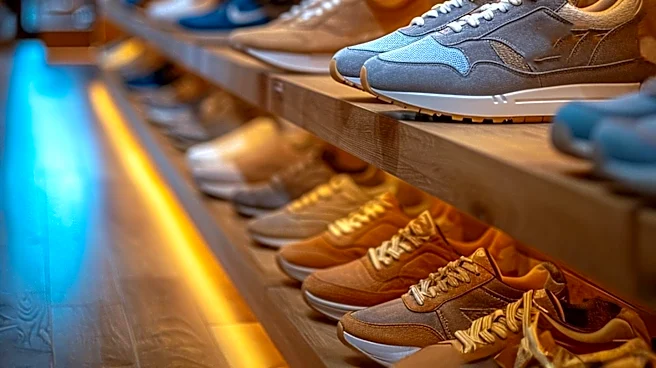
drops. Among the highly anticipated releases was a Foot Locker-exclusive Nike Kobe 3 Low Protro Crenshaw. This special edition sneaker boasts a Midwest Gold/University Blue colorway, drawing inspiration from the Los Angeles Lakers' throwback Minneapolis Lakers uniforms. The design distinctly splits the shoe's color, with light blue adorning the front and a bold gold yellow covering the rear. In addition to the Kobe 3 Low Protro, a Nike Book 2 Crenshaw colorway was also made available at the event. Brett O’Brien, senior vice president and chief marketing officer at Foot Locker, stated that Crenshaw Rec signifies their commitment to investing in communities that have shaped their brand and advanced sneaker culture. The initiative also involved collaborations with late rapper Nipsey Hussle’s The Marathon Brand, designer Gavin Mathieu of Supervsn Studios, Crenshaw High School, and local vendors to ensure an authentic representation of the neighborhood.
Why It's Important?
This initiative is significant for several reasons, impacting both the retail industry and community development. For Foot Locker and Nike, the Crenshaw Rec store represents a strategic shift towards hyper-local, community-centric retail experiences, moving beyond traditional transactional models. By integrating community events and exclusive product releases, they aim to foster deeper engagement and loyalty within specific neighborhoods. This approach could set a new precedent for how major brands interact with their consumer base, potentially influencing future retail strategies across the U.S. The collaboration with local entities, including Nipsey Hussle’s brand and Crenshaw High School, highlights a growing trend of corporate social responsibility and authentic community integration, which can enhance brand perception and drive local economic activity. For the Crenshaw community, the store provides a dedicated space for sports, culture, and community gatherings, potentially offering economic benefits through local vendor partnerships and inspiring the next generation through sports and cultural events. The exclusive sneaker releases also create significant buzz and demand, reinforcing the cultural importance of sneaker collecting and its connection to community identity.
What's Next?
Foot Locker has indicated that the Crenshaw Rec store is the "first expression" of this new concept, suggesting that similar neighborhood-focused experiences will be rolled out in collaboration with Nike Inc. in the future. This implies a potential expansion of this community-centric retail model to other U.S. cities or neighborhoods. While it has not yet been confirmed if the Foot Locker-exclusive Nike Kobe 3 Low Protro or Nike Book 2 Crenshaw sneakers will receive wider releases, the high demand and exclusivity of these initial drops could influence future product distribution strategies. The success of this pilot store will likely be closely monitored by both Foot Locker and Nike, as well as other retailers, to assess the effectiveness of this community engagement model. Future developments may include more localized product collaborations, expanded community programs, and further integration with local cultural figures and institutions to deepen the impact and reach of these retail spaces.
Beyond the Headlines
The opening of Crenshaw Rec by Foot Locker and Nike extends beyond a simple retail launch; it represents a deeper engagement with the cultural and social fabric of urban communities. This model acknowledges the significant role that sports and sneaker culture play in identity formation and community cohesion, particularly in areas like Crenshaw. By partnering with local figures and institutions, the brands are not just selling products but are also investing in the narrative and legacy of the neighborhood. This approach can help bridge the gap between global corporations and local communities, fostering a sense of ownership and pride among residents. Ethically, it raises questions about the authenticity and long-term commitment of such initiatives, and whether they genuinely empower communities or primarily serve corporate marketing objectives. However, if executed with genuine intent, these community-focused retail spaces could become vital hubs for youth development, cultural expression, and local entrepreneurship, potentially shifting the paradigm of retail from purely commercial transactions to meaningful social contributions.