


What's Happening?
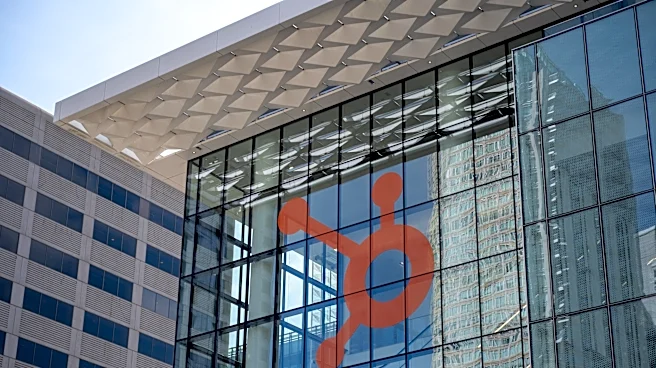
HubSpot (HUBS) stock increased by 6.78% on November 16, 2026, following the disclosure that newly reinstated CEO Brian Halligan purchased approximately $5 million worth of the company's shares on the open market. An SEC filing revealed Halligan acquired
22,985 shares at an average price of $217.44 per share on November 13, boosting his direct and indirect ownership by nearly 39%. This insider buying is generally seen as a strong vote of confidence in the company's future. The purchase occurred just one day after a significant leadership shake-up, where Yamini Rangan stepped down as CEO and board member after five years, and Halligan, a co-founder, immediately returned to the role. Additionally, CFO Kate Bueker announced her retirement, effective February 11, 2027, with Karen Burgess from Adobe set to take over. Halligan and co-founder Dharmesh Shah plan a 'refounding' of the company, focusing on rebuilding its tools around artificial intelligence. Despite these changes, HubSpot reiterated its fourth-quarter revenue guidance of $945 million to $947 million and full-year revenue of $3.685 billion to $3.687 billion.
Why It's Important?
This development is significant for HubSpot and the broader software industry as it signals a strategic pivot towards AI-focused growth under founder leadership. Insider stock purchases, especially of this magnitude, often reassure investors during times of executive transition and market uncertainty. The return of Brian Halligan, a co-founder, suggests a potential revitalization of the company's vision and strategy, particularly in integrating artificial intelligence into its core customer relationship management (CRM) platform. This move is crucial as HubSpot faces increasing competition from fast-moving AI startups and established players like Salesforce, which are rolling out autonomous sales agents. The success of Halligan's 'refounding' initiative could determine HubSpot's ability to retain and attract customers in a rapidly evolving tech landscape, impacting its recurring subscription revenue model. The leadership changes, while potentially disruptive, are framed as necessary to adapt to new market demands and could influence investor sentiment regarding the company's long-term growth prospects.
What's Next?
Investors will closely monitor several key milestones in the coming weeks and months. Karen Burgess is set to officially join HubSpot as Executive Vice President of Finance by November 30, 2026, before assuming the CFO role in February 2027; her commentary on operational efficiency will be watched. Yamini Rangan's formal employment ends on December 1, 2026, and any management departures during this handover will be scrutinized. Brian Halligan is expected to soon share detailed plans for his 'Customer Relationship Harness,' with clear product roadmaps potentially boosting optimism. The company's fourth-quarter 2026 earnings report, scheduled for mid-February 2027, will be critical. Wall Street will assess whether revenue meets the guided range and will pay close attention to the full-year 2027 projections under Halligan's renewed leadership. The market's reaction to these events will indicate whether the initial positive sentiment from Halligan's stock purchase translates into sustained investor confidence and stock recovery.
Beyond the Headlines
The leadership overhaul at HubSpot, particularly the return of a co-founder to steer the company towards an AI-centric future, highlights a broader trend in the technology sector where established companies are aggressively adapting to the rapid advancements in artificial intelligence. This 'refounding' could serve as a case study for other mature tech firms grappling with disruption from AI. The ethical implications of such rapid technological shifts, especially concerning the potential for AI to reduce the need for human workers and thus impact demand for user-based software seats, will be a continuous underlying theme. Furthermore, the dual leadership changes (CEO and CFO) within a short period introduce operational friction and distraction, raising questions about the stability and execution risk during a critical product development phase. The market's long-term assessment will depend not just on strategic vision but also on the company's ability to navigate these internal transitions while fending off intense external competition.