







What's Happening?
A delegation of U.S. farmers from Minnesota, Wisconsin, and Ohio, alongside leaders from the U.S. agriculture industry and officials from state agriculture departments and the Great Lakes St. Lawrence Seaway Development Corporation, recently visited Morocco.
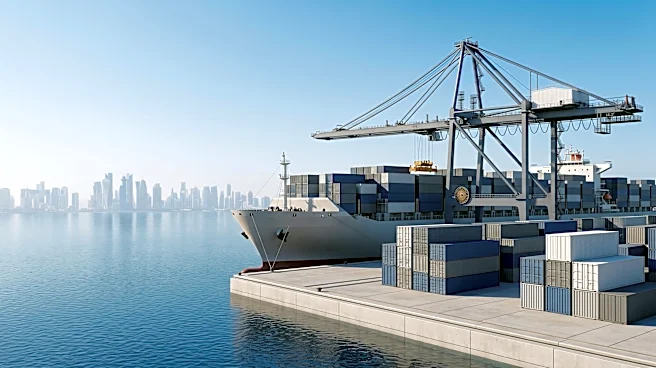
The purpose of the visit, led by the USIP Alliance, was to strengthen agricultural trade, logistics, and market opportunities between the United States, Africa, and Europe. The delegation toured the Casablanca and Tanger Med ports, engaging with local officials to discuss the critical role of port and transportation infrastructure in expanding agricultural trade. Morocco's strategic location is seen as a potential gateway for U.S. producers into broader regional markets in Africa, Europe, and the Middle East. The U.S. and Morocco have maintained a free trade agreement since 2006, making Morocco the only African nation with such an agreement with the U.S. This existing relationship provides a foundation for discussions on agricultural exports, port infrastructure, food processing, and access to wider markets.
Why It's Important?
This initiative is significant for U.S. agriculture as it seeks to diversify export markets and enhance trade efficiency. Morocco, despite having a substantial domestic agricultural sector, is a major importer of agricultural commodities, including feed grains, pulses, rice, livestock products, dairy, poultry, and soybeans. For instance, Morocco imported approximately $180 million of U.S. soybean meal in the 2024/25 marketing year, highlighting its importance as a market for American farmers. By improving connections between agricultural producers, ports, shipping companies, and buyers, the U.S. aims to streamline trade processes and open new markets for both American and African producers. The visit underscores the U.S. commitment to leveraging existing trade agreements and exploring new avenues for economic growth in the agricultural sector, potentially benefiting American farmers by increasing demand for their products and reducing reliance on traditional markets.
What's Next?
The discussions initiated during this visit are expected to lead to further collaborations and agreements aimed at enhancing agricultural trade. The focus will likely be on improving logistical chains and infrastructure to facilitate more efficient movement of goods. Both U.S. and Moroccan officials will continue to explore ways to leverage Morocco's strategic position as a hub for accessing broader regional markets. This could involve joint ventures, technological exchanges, and policy adjustments to support increased trade volumes. The ongoing free trade agreement between the two countries will serve as a framework for these future developments, potentially leading to increased agricultural exports for the U.S. and greater food security and economic development for Morocco and the wider region.
Beyond the Headlines
Beyond the immediate economic benefits, this engagement has broader geopolitical implications. By strengthening agricultural ties with Morocco, the U.S. is reinforcing its economic and diplomatic presence in North Africa, a region of increasing strategic importance. This collaboration can foster greater stability and economic interdependence, potentially counteracting the influence of other global powers in the region. Furthermore, by supporting Morocco's role as a gateway to African markets, the U.S. is indirectly contributing to the economic development of the African continent, aligning with broader U.S. foreign policy objectives. The focus on sustainable agricultural practices and efficient supply chains could also set a precedent for future trade relationships, promoting responsible economic growth and resource management in a global context.