



What's Happening?
Canadian interior designer Luke Havekes has transformed a 1,195-square-foot new-build apartment in Montreal for homeowners Richard and Sophie. The apartment, located on the 27th floor of a new residential complex, initially presented as a 'blank canvas'
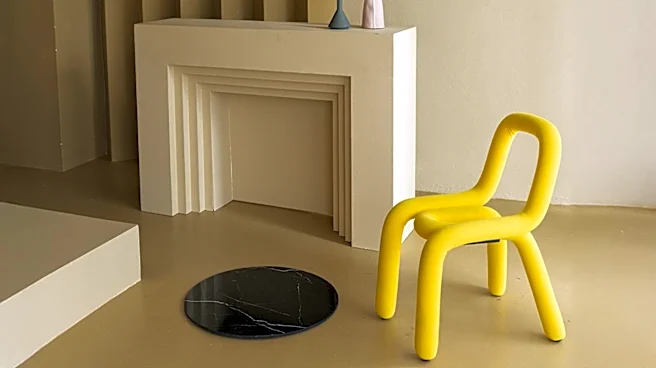
despite its high-quality finishes and unobstructed views of the city's historic harbor. Havekes introduced a 'colorful, free-spirited, and cheerful' aesthetic, moving away from the apartment's initial 'cold and sterile' feel, particularly due to its exposed concrete ceilings and columns. He applied Venetian plaster to these concrete surfaces to create a richer and more enveloping atmosphere. The design incorporates 'quirky objets d’art' and animal-inspired decor, alongside a distinctive butter yellow plaster in the main room, which initially surprised the clients but ultimately became a beloved feature. This project aimed to infuse the space with personality and reflect the homeowners' individual tastes.
Why It's Important?
This design project highlights a growing trend in interior design towards personalization and the integration of bold, unconventional elements in modern living spaces. The use of butter yellow plaster and animal-inspired decor in a new-build apartment challenges traditional notions of minimalist or sterile contemporary design, suggesting a shift towards more expressive and character-filled interiors. For the U.S. design industry, this could signal an increased demand for designers capable of blending diverse textures, colors, and artistic elements to create unique residential environments. It also underscores the importance of client-designer collaboration in achieving a space that truly reflects the occupants' personalities, even if initial reactions to design choices are hesitant. The project demonstrates how strategic material choices, like Venetian plaster, can significantly alter the ambiance of a space, moving it from industrial to inviting.
What's Next?
The success of this Montreal apartment transformation may inspire other designers and homeowners to explore more adventurous and personalized design choices in new constructions. We might see a continued move away from generic, mass-produced interior aesthetics towards bespoke solutions that incorporate unique textures, colors, and art. This could lead to an increased market for specialized materials like Venetian plaster and a greater appreciation for designers who can skillfully integrate diverse design elements. Homeowners might become more open to unconventional color palettes and decor, seeking to infuse their living spaces with distinct character. The project could also influence architectural trends, encouraging developers to consider more adaptable and customizable interior frameworks in future residential complexes.
Beyond the Headlines
The transformation of this Montreal apartment delves into the psychological impact of living spaces on well-being. The initial 'blank canvas', while offering quality, lacked the warmth and personality essential for a home. The designer's intervention, particularly the introduction of butter yellow and animal-inspired elements, speaks to a deeper human need for connection, comfort, and self-expression within one's environment. This project subtly challenges the prevailing minimalist aesthetic, suggesting that true luxury in design might lie not in stark simplicity, but in the thoughtful layering of color, texture, and art that evokes emotion and personal history. It highlights how interior design can be a powerful tool for creating a sense of belonging and joy, transforming a mere dwelling into a cherished home that evolves with its inhabitants.