





What's Happening?
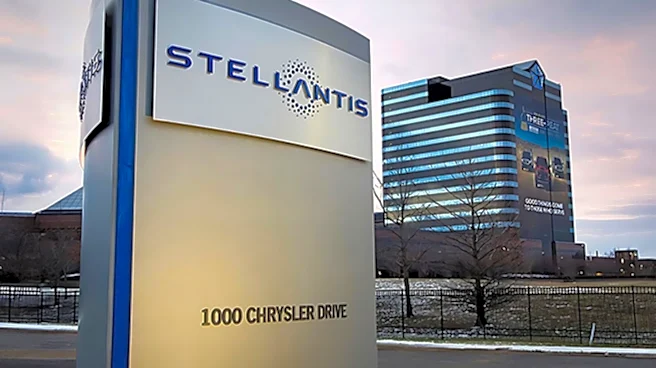
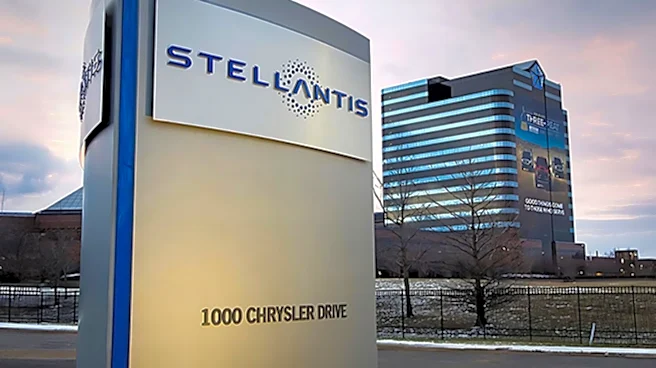
Stellantis has named Tim Kuniskis as its U.S. chief commercial officer, expanding his responsibilities to include U.S. retail sales, fleet sales, and the dealer network. This move consolidates leadership for American brands, marketing, and sales under
one executive. Kuniskis, who previously led Stellantis’ American brands and marketing, will now report directly to Pablo Di Si, the company’s North America COO. This change follows the departure of Michael Orange, who served as senior vice president of U.S. sales and network performance for less than seven months. Additionally, Stellantis announced other leadership changes, with Bob Broderdorf returning to lead the Dodge brand and Matt McAlear focusing exclusively on Chrysler. These organizational shifts are part of Stellantis' broader strategy, including the FaSTLAne 2030 strategic plan, aimed at streamlining decision-making and achieving aggressive targets.
Why It's Important?
This leadership restructuring at Stellantis is significant for the U.S. automotive market as it aims to create a more unified and efficient approach to sales and marketing. By placing all American brands, marketing, retail, fleet sales, and the dealer network under a single leader, Stellantis seeks to improve retail performance, strengthen dealer partnerships, and increase market share. The departure of Michael Orange after a short tenure highlights the company's commitment to finding the right leadership to execute its strategic vision. For U.S. consumers, a more cohesive sales and marketing strategy could lead to more consistent brand messaging and potentially improved customer experiences. For dealers, having a single point of contact for various aspects of their relationship with Stellantis could simplify operations and foster stronger collaboration. The emphasis on aggressive targets within the FaSTLAne 2030 plan suggests a push for significant growth and competitiveness in the U.S. market.
What's Next?
With Tim Kuniskis at the helm of U.S. commercial operations, Stellantis is expected to implement a more integrated strategy across its American brands, marketing, and sales channels. The company's focus will likely be on achieving the aggressive targets outlined in its FaSTLAne 2030 strategic plan. This could involve new initiatives to boost retail sales, enhance dealer support, and expand market presence. The leadership changes at Dodge and Chrysler, with Bob Broderdorf and Matt McAlear taking on focused roles, indicate a renewed emphasis on these key brands. Stakeholders, including dealers and investors, will be closely watching for the impact of these changes on Stellantis' U.S. sales performance and market share in the coming months and years. The company's ability to streamline decision-making and execute its strategic plan effectively will be crucial for its success in the competitive U.S. automotive landscape.
Beyond the Headlines
The consolidation of sales and marketing leadership under a single U.S. chief commercial officer at Stellantis reflects a broader trend in the automotive industry towards more integrated and agile organizational structures. In a rapidly evolving market characterized by technological advancements, shifting consumer preferences, and intense competition, automakers are seeking to optimize their operations for greater efficiency and responsiveness. This move could also signal a strategic effort to better align product development with market demand, as a unified commercial leader can provide clearer feedback from the sales front to the design and manufacturing teams. The emphasis on 'a clear line of decision-making' suggests a desire to accelerate strategic initiatives and adapt more quickly to market dynamics, which is critical in an industry facing significant disruption from electric vehicles and new mobility solutions. The success of this integrated approach could serve as a model for other large automotive corporations navigating similar challenges.