





What's Happening?
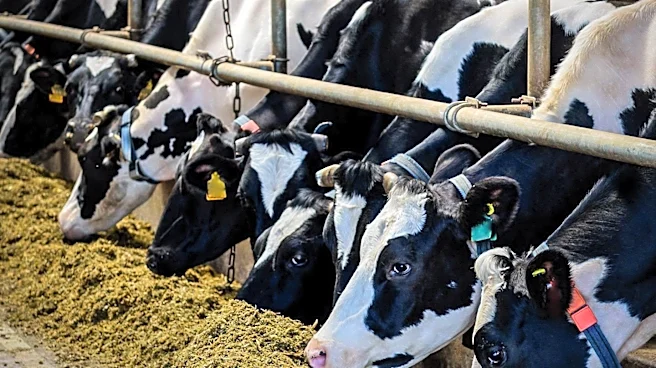
A significant philanthropic effort has emerged from the artificial intelligence (AI) sector, with workers and investors contributing $40 million to improve the welfare of factory-farmed animals. This initiative is largely driven by younger AI professionals
who are eager to make impactful donations earlier in their careers. The movement gained momentum following a podcast appearance by Lewis Bollard, a leader in farm animal welfare, who highlighted the severe conditions faced by animals in industrial agriculture. The podcast inspired Dwarkesh Patel to launch a fundraising campaign for FarmKind, a non-profit focused on ending factory farming. The campaign quickly raised $2.3 million, with additional contributions continuing to flow in. This trend is part of a broader shift in philanthropy, where AI-generated wealth is expected to significantly increase charitable giving in the coming years.
Why It's Important?
The influx of donations from the AI sector represents a potential turning point for animal welfare advocacy, which has historically been underfunded compared to other causes. The engagement of younger tech workers in philanthropy could lead to transformative changes in how factory-farmed animals are treated. This shift also reflects a broader trend of younger generations taking a proactive approach to philanthropy, challenging traditional norms of waiting until later in life to donate. The AI boom is projected to generate $300 billion in new philanthropic wealth, potentially reshaping the landscape of charitable giving and prioritizing causes that have been previously overlooked.
What's Next?
As the AI industry continues to grow, the philanthropic landscape is likely to evolve with it. The ongoing engagement of AI professionals in charitable activities could lead to sustained support for animal welfare and other underfunded causes. Additionally, the success of initiatives like FarmKind may inspire similar efforts across different sectors, encouraging more tech workers to leverage their wealth for social good. The challenge will be ensuring that these donations lead to meaningful and lasting change, as some prominent figures in the tech industry have expressed skepticism about the effectiveness of traditional philanthropy.