





What's Happening?
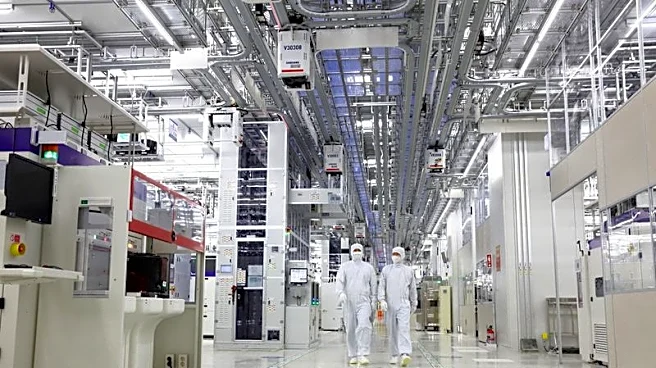
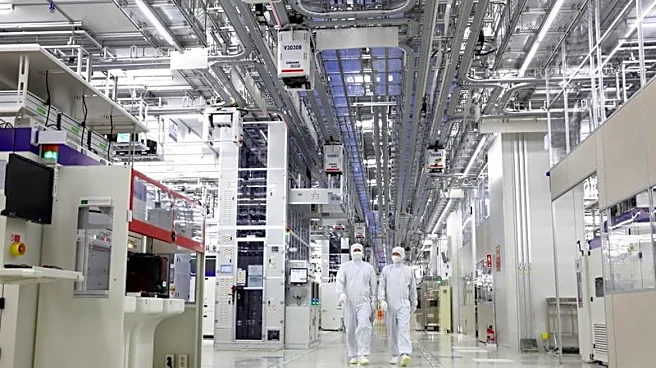
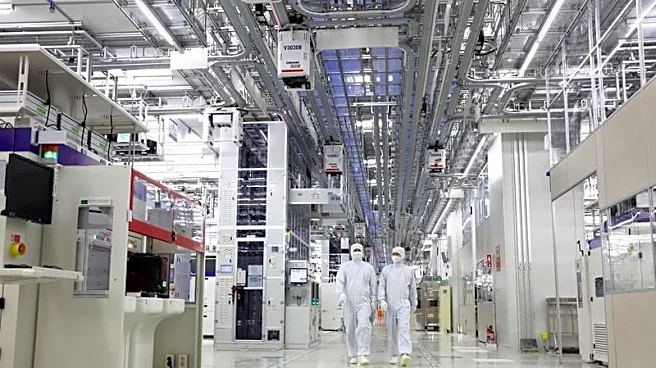
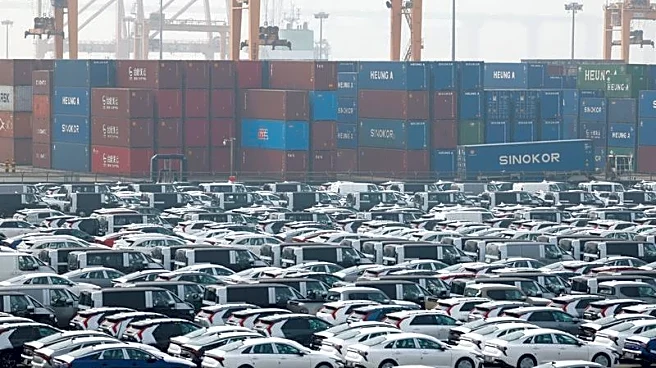
South Korea's exports in July experienced a significant increase, driven by a strong global demand for AI chips. According to South Korea's trade ministry, semiconductor exports surged by 179% as memory-chip prices continued to rise. This growth occurred
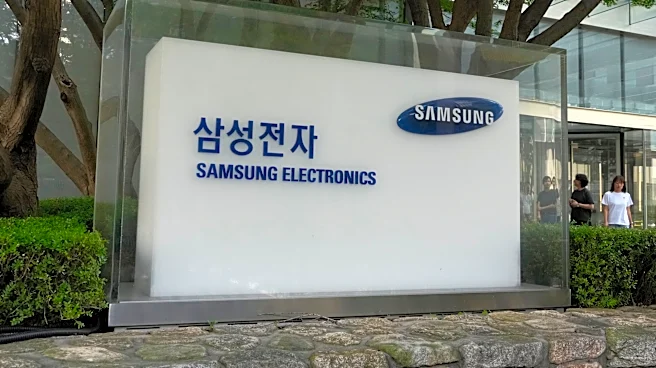
amidst uncertainties regarding Apple's potential use of Chinese memory chips and the emergence of new AI technology in China. Additionally, computer exports rose by 404%, fueled by increased AI investments from large U.S. technology companies. Samsung Electronics reported a more than 250-fold increase in quarterly chip profit and announced multiyear supply agreements with major data-center operators. The company anticipates that global semiconductor shortages will persist and intensify until 2028. Despite these gains, South Korea's benchmark KOSPI index fell by 22% in July, marking its largest monthly decline since 2008, due to a sell-off in AI-related shares.
Why It's Important?
The surge in South Korea's exports, particularly in semiconductors and computers, underscores the growing global demand for AI technology, which is significantly impacting U.S. tech investments. The increased exports to the U.S., which rose by 69%, highlight the reliance of American technology companies on South Korean semiconductor products. This dependency is crucial as the U.S. seeks to advance its AI capabilities. The ongoing semiconductor shortages, expected to continue into 2028, pose challenges for U.S. tech companies that rely on these components for AI infrastructure. The situation also reflects broader geopolitical dynamics, as uncertainties around Apple's use of Chinese memory chips could influence U.S. tech strategies and supply chain decisions.
What's Next?
As global demand for AI technology continues to rise, U.S. technology companies may need to reassess their supply chain strategies to mitigate risks associated with semiconductor shortages. The ongoing geopolitical tensions, particularly concerning China's role in the semiconductor market, could lead to shifts in trade policies and investment strategies. Additionally, the anticipated continuation of semiconductor shortages may prompt U.S. companies to explore alternative sources or invest in domestic chip manufacturing capabilities. The situation also calls for potential policy interventions to ensure a stable supply of critical components for AI development.