




What's Happening?
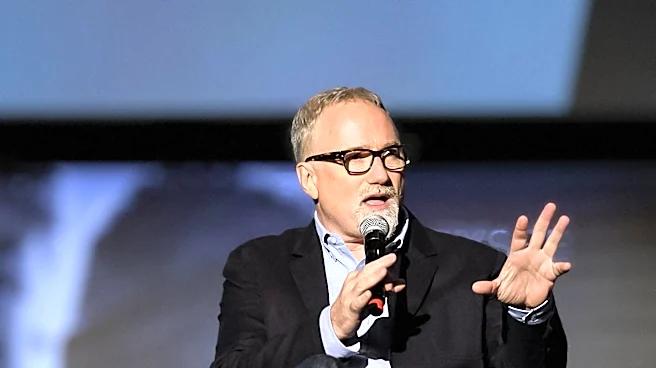
Filmmaker David Fincher has publicly defended his extensive use of artificial intelligence (AI) in his latest film, “The Further Mis-Adventures Of Cliff Booth.” Fincher detailed several applications of AI, including digitally correcting actors' wigs,
adjusting eye lines, and de-aging performers. He specifically mentioned using AI to make a 49-year-old actor appear 24 by erasing wrinkles and altering facial features, a process he stated now takes nine weeks compared to the three years required for similar work on “The Curious Case Of Benjamin Button.” Fincher also utilized full-body scans of actors to create digital doubles for sequences, such as a tracking shot of Brad Pitt and Scott Caan walking on a beach, where the actors were not present during the background filming. He likened these AI-driven techniques to historical filmmaking methods, such as Stanley Kubrick's use of projected backgrounds, arguing that AI is simply the 2026 version of such innovations.
Why It's Important?
Fincher's embrace and defense of AI in filmmaking highlight a growing tension within the entertainment industry regarding technological advancements. His arguments suggest that AI can significantly reduce production time and costs, potentially making ambitious creative visions more attainable. This could lead to a shift in how films are made, with a greater reliance on digital manipulation for visual effects and character appearances. For actors, this might mean new demands for full-body scans and digital doubles, while visual effects artists could see their roles evolve to operating AI tools rather than performing traditional manual tasks. The debate also touches on the perceived authenticity of performances, as Fincher emphasizes that AI does not alter the 'sacred' behavior of actors, only their appearance. However, the efficiency gains from AI, such as compressing three years of work into nine weeks, raise concerns about potential job displacement for visual effects professionals and other crew members in Hollywood.
What's Next?
The ongoing discussion surrounding AI in filmmaking is likely to intensify as more directors adopt these technologies. Fincher's candidness may encourage other filmmakers to openly discuss their AI usage, potentially normalizing its integration into mainstream production. The industry will need to address the employment implications of these advancements, possibly leading to new union negotiations, training programs for AI-specific roles, or revised compensation structures for artists whose work is augmented or replaced by AI. Furthermore, audiences and critics will continue to scrutinize films for their use of AI, potentially influencing public perception and the critical reception of AI-enhanced cinema. The legal and ethical frameworks surrounding AI-generated content, particularly concerning actor likeness and performance, are also expected to evolve as the technology becomes more prevalent.
Beyond the Headlines
Fincher's comments delve into the deeper philosophical questions about the nature of cinema and artistic integrity in the age of advanced technology. His comparison of AI to historical filmmaking techniques, like Kubrick's methods, suggests a continuous evolution of tools rather than a radical departure from artistic principles. However, the ability to de-age actors or create digital doubles raises ethical concerns about the preservation of an actor's original performance and the potential for 'synthetic' performances. The debate also touches on the concept of 'authenticity' in visual storytelling, challenging traditional notions of what constitutes a 'real' cinematic experience. As AI becomes more sophisticated, it could blur the lines between reality and digital creation, prompting a re-evaluation of how audiences engage with and interpret visual media. This technological shift could also lead to new forms of artistic expression and storytelling, pushing the boundaries of what is possible in film.