





What's Happening?
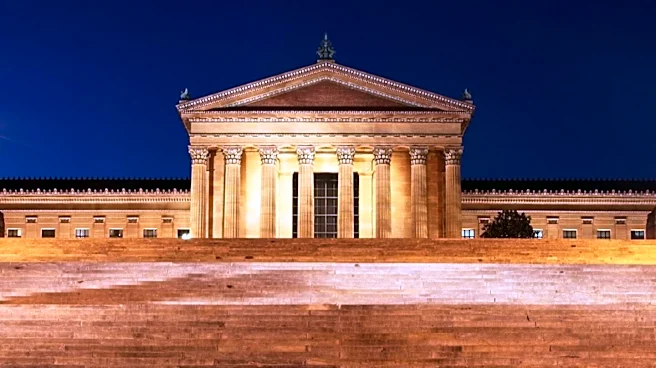
The Philadelphia Museum of Art is currently hosting a retrospective exhibition dedicated to Marcel Duchamp (1887–1968), showcasing his profound influence on 20th-century art. The exhibition features approximately 300 works, including machines, videos,
notes, photographs, constructed objects, and books, tracing Duchamp's evolution from early Impressionist and Futurist influences to his role as an 'anti-artist.' Duchamp famously challenged traditional notions of art, particularly with his 1917 submission of a prefabricated men's urinal titled 'Fountain' to a major Manhattan exhibition, which was rejected. This act, along with his 'readymades'—appropriated everyday objects transformed into art—redefined art as potentially an idea rather than solely a physical object requiring technical mastery or aesthetic beauty. The retrospective also explores his iconoclastic impulses, such as his alteration of the Mona Lisa in 'L.H.O.O.Q.' (1919), and his gender-bending alter ego, Rrose Sélavy, which questioned gender identity and artistic authorship. The exhibition emphasizes Duchamp's rebellious, anti-establishment, and nonconformist spirit, likening him to an 'OG punk' who questioned who decides what constitutes art.
Why It's Important?
This retrospective is significant because it re-examines Marcel Duchamp's enduring legacy and his pivotal role in shaping modern and contemporary art. By challenging the fundamental definitions of art, Duchamp paved the way for conceptual art and influenced generations of artists who followed. His work forced a re-evaluation of artistic skill, beauty, and originality, shifting the focus from the object itself to the idea behind it. This exhibition helps the public understand how Duchamp's radical ideas emerged against the backdrop of early 20th-century traumas, including two World Wars and the Great Depression, which contributed to a dehumanizing era. His questioning of artistic authority and societal norms resonates with contemporary discussions about art's purpose and accessibility. The exhibition also highlights how Duchamp's 'punk-like' ethos of rebellion and nonconformity continues to inspire artists today, encouraging viewers to adopt a critical perspective when encountering art that challenges conventional aesthetics.
What's Next?
The Marcel Duchamp retrospective will remain on view at the Philadelphia Museum of Art through January 31, 2027. Following its run in Philadelphia, a version of the exhibition is scheduled to appear in Paris next spring, indicating its international significance and continued scholarly interest in Duchamp's work. The exhibition's presence in major art institutions like the Philadelphia Museum of Art and the Museum of Modern Art (MoMA), which co-organized the event, ensures that Duchamp's influence will continue to be explored and debated within the art world and among the public. Future discussions may focus on how contemporary artists continue to draw inspiration from Duchamp's iconoclastic approach, particularly in an era where definitions of art are constantly evolving. The exhibition also encourages ongoing dialogue about the role of museums in presenting challenging and unconventional art, and how such works contribute to broader cultural conversations.
Beyond the Headlines
Beyond the immediate display of Duchamp's works, this exhibition delves into deeper implications regarding artistic freedom, intellectual property, and the very nature of creativity. Duchamp's use of 'readymades' raised profound questions about authorship and originality, suggesting that an artist's intention or conceptual framework could be as significant as their manual skill. His gender-bending alter ego, Rrose Sélavy, explored themes of identity, performance, and the fluidity of self long before these concepts became mainstream in contemporary discourse. The exhibition implicitly challenges viewers to consider the ethical and philosophical boundaries of art: what makes something art, who decides, and what responsibilities do artists have to their audience and society? Duchamp's legacy encourages a critical stance against institutional authority and conventional thinking, fostering an environment where questioning established norms is not only accepted but celebrated as a vital component of artistic and intellectual progress.