





What's Happening?
Reju, a textile-to-textile regeneration company, has announced an expanded industry network through collaborations with six mills, including Swisstex Direct in Los Angeles, California. This initiative aims to accelerate the integration of regenerated
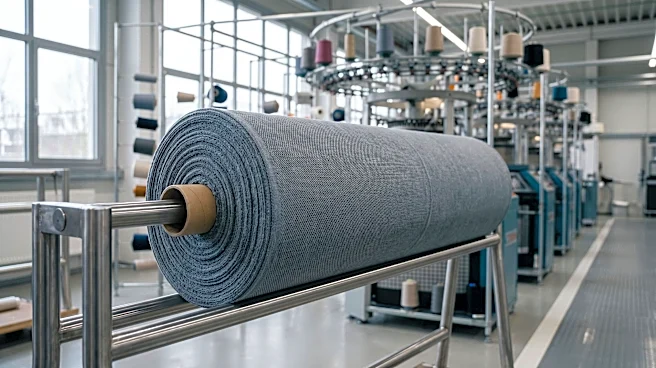
polyester into the global textile supply chain. The ongoing work focuses on moving Reju’s regenerated polyester from raw output at its future Regeneration Hubs into finished fabric. Swisstex Direct, a sustainable knitting, dyeing, and finishing provider, offers expertise in circular knit fabrics, including natural and synthetic fibers, recycled materials, and performance finishes. This collaboration is part of Reju's broader strategy to establish a global textile recycling circular system, building on previous announcements such as the selection of Rochester, New York, as its first North American regeneration hub. The company is working with these mills to develop fabrics that meet market demand and facilitate the adoption of regenerated materials at scale.
Why It's Important?
This collaboration is significant for the U.S. textile industry as it strengthens the domestic infrastructure for sustainable textile production and recycling. The involvement of Swisstex Direct, a U.S.-based company, highlights a growing commitment to circular economy principles within the country. By integrating regenerated polyester into the supply chain, the initiative addresses environmental concerns related to textile waste and reduces reliance on virgin materials. This move can create new economic opportunities in textile manufacturing, particularly in areas focusing on advanced recycling and sustainable practices. For consumers, it could lead to a wider availability of apparel and other textile products made from recycled content, aligning with increasing demand for eco-friendly options. The development of a robust regeneration network in North America, including the Rochester hub, positions the U.S. as a key player in the global shift towards more sustainable textile practices.
What's Next?
Reju plans to continue developing its network of Regeneration Hubs, with Rochester, New York, serving as its first North American site. The ongoing work with mills like Swisstex Direct will focus on refining the process of transforming regenerated polyester into market-ready fabrics. This will involve further development projects tied to Reju's manufacturing network and responding to market demand from brands that have signed development agreements. The company aims to deliver high-quality regenerated polyester at a scale necessary for mainstream adoption, moving the industry closer to a true textile-to-textile circular system. Future steps will likely include expanding production capacities, securing more brand partnerships, and potentially exploring additional U.S. locations for regeneration facilities to meet growing demand for sustainable textiles.
Beyond the Headlines
The expansion of Reju's network, particularly with a U.S. partner like Swisstex Direct, signifies a broader shift in the textile industry towards circularity and sustainability. This development has implications beyond just environmental benefits, touching upon supply chain resilience and technological innovation. By focusing on post-consumer textile-to-textile regeneration, Reju and its partners are addressing the massive challenge of textile waste, which often ends up in landfills. This approach could foster new research and development in material science, leading to advanced recycling technologies and novel fabric compositions. Furthermore, it could influence policy discussions around waste management, product lifecycle responsibility, and green manufacturing incentives in the U.S., potentially setting new industry standards for environmental performance and resource efficiency.