








What's Happening?
Following the conclusion of the 2026 World Cup, several NFL stadiums in the United States are transitioning back to their original identities. The World Cup, which was hosted across 16 stadiums in the U.S., Canada, and Mexico, required these venues to adhere
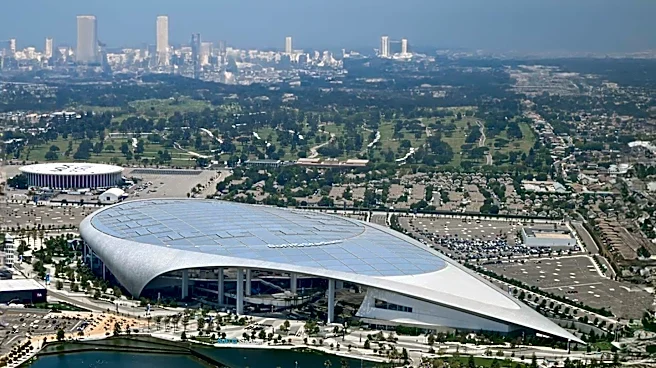
to FIFA regulations, including the installation of natural grass and the removal of sponsorship branding. Now, stadiums like AT&T Stadium, Mercedes-Benz Stadium, and SoFi Stadium are reverting to their NFL configurations. This involves removing World Cup-specific modifications and reinstating NFL branding and artificial turf. Some stadiums, such as AT&T Stadium, have shared this transformation process on social media, highlighting the return to their football roots.
Why It's Important?
The transition of these stadiums back to their NFL identities is significant for several reasons. Firstly, it marks the end of a major international event and the resumption of regular NFL activities, which are crucial for local economies and fan engagement. The NFL season is a major economic driver, generating substantial revenue through ticket sales, merchandise, and broadcasting rights. Additionally, the return to NFL branding and configurations underscores the importance of these venues in American sports culture. The transformation also highlights the logistical and financial challenges involved in hosting international events, as stadiums must be versatile enough to accommodate different sports and their specific requirements.
What's Next?
As these stadiums prepare for the upcoming NFL season, they will focus on ensuring that all necessary modifications are completed in time for the games. This includes reinstalling artificial turf and updating branding to reflect their NFL affiliations. Stadiums like Mercedes-Benz Stadium are also looking ahead to future events, such as the Super Bowl, which will require further preparations. The successful transition back to NFL configurations will be crucial for maintaining fan satisfaction and operational efficiency. Additionally, the experience gained from hosting the World Cup may influence future decisions regarding stadium upgrades and event hosting capabilities.