






What's Happening?
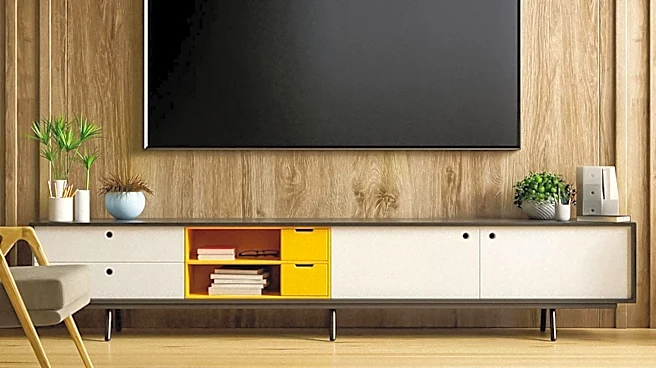
Homeowners are increasingly opting for low-profile TV stands to create more organized and visually spacious living areas. These stands, typically ranging from 12 to 20 inches in height and 14 to 16 inches in depth, are designed to sit closer to the floor,
allowing for open sightlines and making rooms feel larger. The trend moves away from bulky entertainment centers, favoring designs that integrate the television more seamlessly into the room's aesthetic. Key features of these stands include ample storage with soft-close drawers to conceal cables and remotes, and widths that match or slightly exceed the TV panel for visual balance. Many low-profile stands are also available fully assembled, reducing the hassle of setup and immediate clutter.
Why It's Important?
The shift towards low-profile TV stands reflects a broader consumer preference for minimalist and functional home design, particularly in the U.S. where living spaces are becoming more compact. With the average new single-family home in 2024 being 2,421 square feet and living rooms shrinking, efficient use of space is paramount. This trend impacts the furniture industry, driving demand for designs that prioritize both aesthetics and practicality. Manufacturers are responding by incorporating features like soft-close drawers and offering fully assembled options, which cater to consumers seeking convenience and a clutter-free environment. This movement also highlights a change in how televisions are perceived in home decor, moving from a central, dominant feature to a more integrated element.
Beyond the Headlines
The adoption of low-profile TV stands goes beyond mere furniture choice; it signifies a cultural shift towards intentional living and a desire for calm, uncluttered home environments. The emphasis on 'soft-close drawers' and 'fully assembled' options speaks to a premium placed on user experience and immediate gratification, reflecting modern consumer expectations. This trend also subtly influences interior design principles, encouraging homeowners to consider how furniture height and depth impact the perceived size and flow of a room. The psychological effect of open sightlines and reduced visual clutter can contribute to a greater sense of well-being and relaxation within the home, making this a lifestyle choice as much as a design one.