








What's Happening?
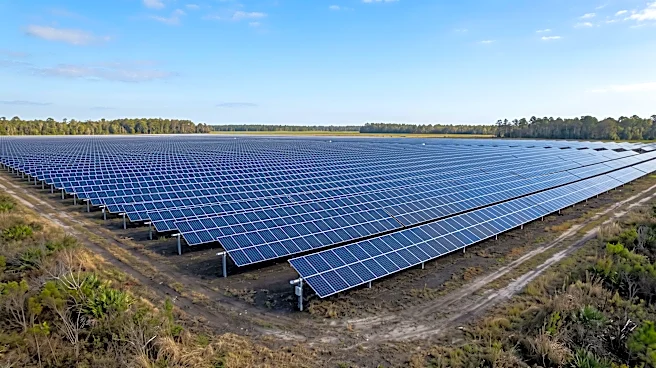
Entergy Louisiana has filed a lawsuit against the Iberville Parish Council after the council rejected the proposed 1,600-acre Cypress Harvest solar farm and battery storage complex. The project, intended for an area southwest of Plaquemine, was turned
down in mid-August following public concerns regarding potential heavy metal contamination, fire risks, property value impacts, and aesthetic issues. Entergy Louisiana claims that the council's own solar farm ordinance mandates a written statement detailing reasons for denial and a 30-day period to address any identified defects. The utility asserts that it received neither a written explanation nor an opportunity to remedy any issues, stating that no defects were ever identified. The Louisiana Public Service Commission had previously approved the solar complex in April, with Entergy hoping to begin construction by last month and have the farm operational by September 2028. The Parish Council met in closed session to discuss the lawsuit, which was filed on October 5, and plans to file a response defending its interpretation of the law.
Why It's Important?
This lawsuit highlights the growing challenges faced by renewable energy projects in Louisiana, despite support from major utilities and industrial operations seeking cleaner power sources. The rejection of the Cypress Harvest solar farm, a nearly $300 million investment expected to generate 200 megawatts of power, underscores a conflict between local community concerns and broader energy transition goals. The outcome of this legal dispute could set a precedent for how local governments in Louisiana handle future renewable energy proposals, particularly concerning the transparency and adherence to established ordinances in the project approval or denial process. For Entergy Louisiana, a successful legal challenge could pave the way for the development of more solar infrastructure, contributing to the state's energy diversification. Conversely, if the council's decision is upheld, it could empower local communities to exert greater control over land use and environmental concerns, potentially slowing the pace of renewable energy development in the region. The case also brings into focus the economic benefits, such as an estimated $7.8 million in one-time sales tax revenue and $2.9 million in annual property tax revenue, that could be lost or gained depending on the project's fate.
What's Next?
The Iberville Parish Council is preparing to file a response to Entergy Louisiana's lawsuit, defending its interpretation of the solar farm ordinance. The legal proceedings will likely focus on whether the council adhered to its own regulations requiring a written statement of denial reasons and an opportunity for the developer to address concerns. The court's decision will be crucial in determining the future of the Cypress Harvest solar farm and could influence how similar projects are evaluated across Louisiana. Depending on the ruling, Entergy Louisiana may either proceed with the project, potentially after addressing specific concerns, or face further delays and re-evaluation of its development strategy in the parish. This case also signals a potential increase in legal challenges as renewable energy developers navigate local opposition and varying interpretations of zoning and environmental regulations. The broader implications could include other local governments reviewing or revising their solar farm ordinances to provide clearer guidelines and processes for project approvals and rejections.
Beyond the Headlines
The dispute between Entergy Louisiana and the Iberville Parish Council delves deeper than a simple project rejection; it exposes the complex interplay between local governance, community sentiment, and the push for sustainable energy. The public's concerns about heavy metal contamination, fires, property values, and aesthetics reflect a broader societal apprehension regarding the environmental and economic impacts of large-scale industrial developments, even those intended for renewable energy. This case highlights the need for robust community engagement and transparent communication from developers and local authorities to build trust and address legitimate concerns. The council's argument that the requirement for a defect letter doesn't apply to them as they are not an 'official' capable of issuing such a letter, despite having an ordinance, points to potential ambiguities in local regulations that can create legal loopholes and hinder progress. The outcome could influence the development of more comprehensive and unambiguous local ordinances for renewable energy projects, ensuring both community protection and efficient project implementation. It also underscores the ethical dimension of balancing local agricultural land preservation with the imperative for clean energy infrastructure.