








What's Happening?
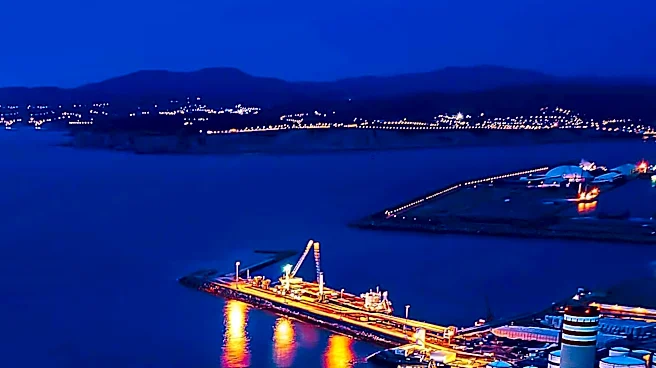
U.S. natural gas futures have dropped to a six-week low, falling by about 4% due to expectations of reduced gas flows to liquefied natural gas (LNG) export plants. This decline is attributed to planned maintenance at the Freeport LNG plant in Texas and
a larger-than-expected storage build reported by the U.S. Energy Information Administration. The average gas flows to major U.S. LNG export plants have increased slightly in July but remain below the record highs seen in April. Additionally, the first phase of the Energia Costa Azul plant in Mexico has shipped its first cargo, which is expected to compete with California for gas supplies from the Permian shale.
Why It's Important?
The drop in natural gas prices reflects the dynamic nature of the energy market, influenced by both domestic production and international demand. The maintenance at the Freeport LNG plant highlights the vulnerability of supply chains to operational disruptions. The increased storage build suggests a temporary oversupply, which could impact pricing and profitability for producers. This situation also underscores the competitive landscape for gas supplies, particularly in regions like California, which may face higher competition for resources. The developments in LNG exports and storage levels are critical for stakeholders in the energy sector, including producers, consumers, and policymakers.
What's Next?
As maintenance at the Freeport LNG plant continues, gas flows are expected to remain low, potentially affecting export volumes and domestic supply. The energy market will closely monitor the completion of maintenance activities and any changes in storage levels. Additionally, the competition for gas supplies between California and the Energia Costa Azul plant could influence regional pricing and supply strategies. Stakeholders will need to adapt to these market conditions, balancing supply and demand to optimize operations and profitability.