










What's Happening?
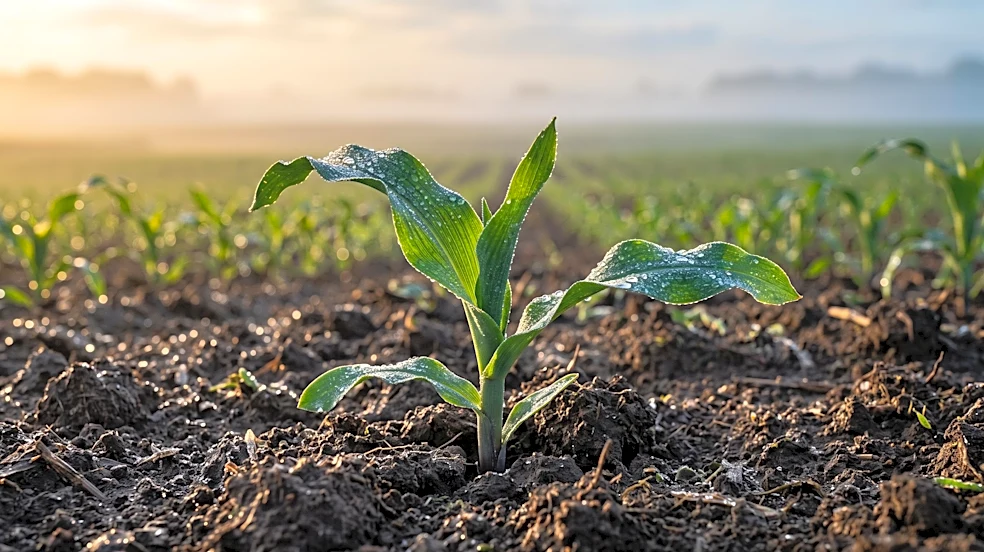
Bayer Crop Science has announced a strategic collaboration with California-based Switch Bioworks to advance a new generation of biological nitrogen technologies. This partnership aims to provide corn growers with additional options for crop nutrition
management, focusing initially on biological nitrogen fixation. Switch Bioworks, a Stanford University spinout, has developed genetically engineered microbes designed to colonize plant roots before activating nitrogen production. This approach addresses a long-standing challenge in biological nitrogen research where microbes either struggle to establish on roots or fail to produce sufficient nitrogen. According to Switch Bioworks, their technology has demonstrated five times more nitrogen production in controlled studies compared to continuously active strains. The collaboration will leverage Switch's microbial engineering platform and Bayer's expertise in product development, field testing, and commercialization. Switch Bioworks has already received authorization from the U.S. Department of Agriculture (USDA) and the Environmental Protection Agency (EPA) for field trials of its engineered microbial fertilizer across multiple locations in the U.S. Midwest.
Why It's Important?
This collaboration signifies a continued investment by major agricultural companies in biological nitrogen solutions, which is crucial for U.S. agriculture. Nitrogen fertilizer represents one of the largest input costs for many corn growers, making technologies that improve nitrogen efficiency highly valuable. The agricultural biologicals sector has been expanding rapidly as farmers seek tools to optimize nutrient management, enhance crop resilience under variable conditions, and meet sustainability goals. If successful under commercial farming conditions, these biological nitrogen-fixing products could offer growers an alternative tool to support crop nutrition programs, potentially reducing their reliance on conventionally manufactured nitrogen fertilizers. This could lead to significant economic benefits for farmers through reduced input costs and improved crop yields, while also contributing to more sustainable farming practices by lessening the environmental impact associated with synthetic fertilizer production and use.
What's Next?
The technology is currently in the development stage, with field trials underway across the U.S. Midwest. The success of these trials under commercial farming conditions will be critical in determining the future commercialization efforts and how these biological nitrogen-fixing products will integrate into practical farm management systems. Further research and development will focus on optimizing the performance and scalability of these engineered microbes. If the trials yield positive results, Bayer and Switch Bioworks will likely move towards broader commercialization, which would involve scaling up production and distribution channels. The agricultural industry will be closely watching the outcomes, as widespread adoption of such technologies could reshape crop nutrition strategies and contribute to the broader shift towards more sustainable and efficient agricultural practices in the United States.
Beyond the Headlines
The development of genetically engineered microbes for nitrogen fixation raises broader implications concerning the future of agricultural biotechnology and its acceptance. While offering significant environmental and economic benefits, the use of genetically engineered organisms in agriculture often sparks discussions around regulatory oversight, ecological impact, and consumer perception. The success of this technology could pave the way for more advanced biological solutions in crop management, potentially reducing agriculture's carbon footprint and reliance on non-renewable resources. However, it also highlights the ongoing need for transparent communication and robust scientific validation to build trust among farmers and the public. This innovation represents a step towards a more biologically integrated agricultural system, which could fundamentally alter how nutrients are managed in large-scale crop production, pushing the boundaries of what is considered sustainable farming.