










What's Happening?
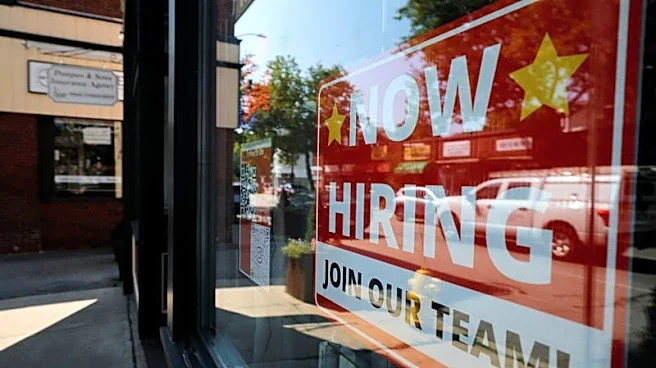
The U.S. labor market showed signs of cooling in June, with job growth slowing more than expected and payroll gains for the previous two months being revised lower, according to the Labor Department. This development has led financial markets to reduce
expectations for a near-term Federal Reserve rate hike. The slower job growth provides relief for U.S. equities, particularly high-flying tech stocks, as investors had been concerned that a strong labor market might prompt the Fed to adopt a more hawkish stance to combat inflation. The report suggests that the labor market is not fueling inflation, allowing the Fed more time to consider its monetary policy options. U.S. stocks initially rose before giving up gains, and the dollar slipped as traders adjusted their rate hike expectations.
Why It's Important?
The cooling of the labor market has significant implications for the U.S. economy and financial markets. A slower pace of job growth may alleviate inflationary pressures, reducing the urgency for the Federal Reserve to raise interest rates. This could support stock market valuations, particularly in sectors like technology that are sensitive to interest rate changes. The prospect of stable or lower interest rates is generally favorable for equities, as it reduces borrowing costs and supports corporate investment. However, the situation also highlights the delicate balance the Fed must maintain between supporting economic growth and controlling inflation. Investors and policymakers will closely monitor future labor market data to assess the trajectory of the economy and the appropriate monetary policy response.