







What's Happening?
California-based start-up Haivya has developed a 'Bioacoustic Cultivation and Communication Protocol' (BCCP) that uses acoustic signals to stimulate plant growth. The company claims that its trials have shown significant yield increases in crops like
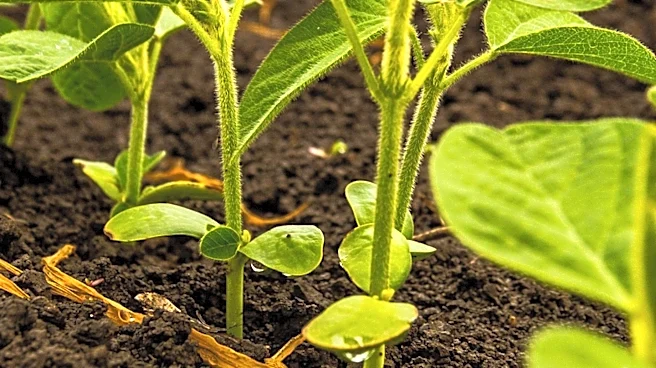
soybeans, peppers, and cannabis without genetic engineering or chemicals. The BCCP involves exposing plants to layered sounds and frequencies, played at a volume under 80 decibels. Haivya's research indicates that different sound protocols can lead to varying results, such as increased yield and reduced water consumption. The start-up's findings suggest that plants can perceive and respond to vibrations, potentially offering new ways to influence crop development.
Why It's Important?
Haivya's approach to using sound to enhance plant growth could revolutionize agricultural practices by providing an alternative to traditional methods that rely on genetic modification or chemical treatments. If validated by further research, the BCCP could lead to more sustainable and efficient farming techniques, reducing resource consumption and increasing crop yields. The implications for agriculture are significant, as even small changes in yield can have a substantial impact on food production and supply chains. Additionally, the research could expand scientific understanding of plant biology and how plants interact with their environment, potentially leading to new innovations in precision agriculture.