




What's Happening?
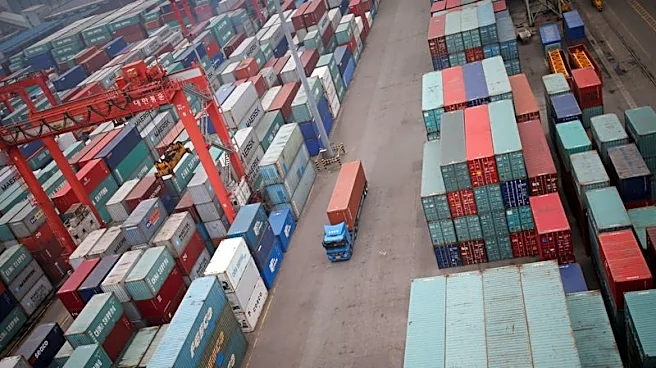
Vietnam's industrial robot market is experiencing rapid growth, making it Southeast Asia's fastest-growing robotics hub. This surge is primarily driven by the relocation of manufacturing facilities from China to Vietnam and other Southeast Asian countries.
According to Ken Nyi Lau, Epson's Southeast Asia regional product manager, relocating manufacturers constitute the majority of Epson's robotics revenue in Vietnam. These clients are predominantly in electrical and electronic component assembly, automotive manufacturing, food processing, and packaging sectors, all of which require automation to enhance productivity, ensure quality control, and optimize operating costs. The International Federation of Robotics (IFR) reported that the number of industrial robots globally reached a record 5 million units in 2025, a 9% increase, with Asia leading this growth.
Why It's Important?
The rapid expansion of Vietnam's industrial robot market signifies a significant shift in global manufacturing supply chains. As companies diversify their operations away from China, Vietnam is emerging as a key destination, attracting substantial investment in automation. This trend not only boosts Vietnam's economy but also enhances its position as a manufacturing hub in Southeast Asia. The increased adoption of robotics in sectors like electronics, automotive, and food processing indicates a broader industrial transformation aimed at improving efficiency, quality, and cost-effectiveness. For U.S. businesses with manufacturing interests in Asia, this shift presents opportunities for more diversified and potentially resilient supply chains, while also highlighting the competitive advantages of automated production.
What's Next?
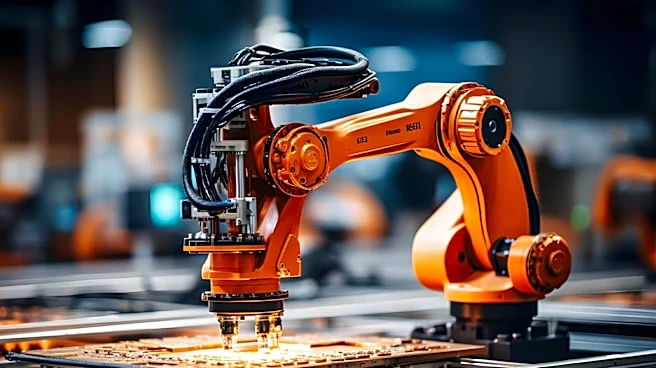
Epson anticipates substantial room for expansion in the Vietnam industrial robot market in the coming years due to ongoing supply chain diversification. While foreign-invested companies are leading the automation drive, an increasing number of domestic Vietnamese businesses are also considering integrating robots into their factories. Epson plans to expand its customer base beyond electrical and electronics into automotive, medical, pharmaceutical, healthcare, and food and beverage sectors. The company is introducing new SCARA and six-axis robot generations with improved payload capacity and compact designs to meet diverse industrial needs. Challenges remain for domestic companies, particularly those with older production lines, but partial automation is being explored as a viable solution.
Beyond the Headlines
The relocation of manufacturing from China to Vietnam, fueled by factors such as U.S. tariffs and supply chain diversification, has profound implications for global trade and industrial development. This shift is not merely about moving factories but also about upgrading manufacturing processes through advanced automation and robotics. The emphasis on precision, durability, and operational reliability in industrial robots reflects the high standards required in modern manufacturing. Furthermore, the growing adoption of automation by domestic Vietnamese businesses suggests a broader economic development trend, where local industries are investing in technology to remain competitive. This could lead to a more skilled workforce and a higher value-added manufacturing sector in Vietnam, potentially influencing regional economic dynamics and trade relationships.