
What's Happening?
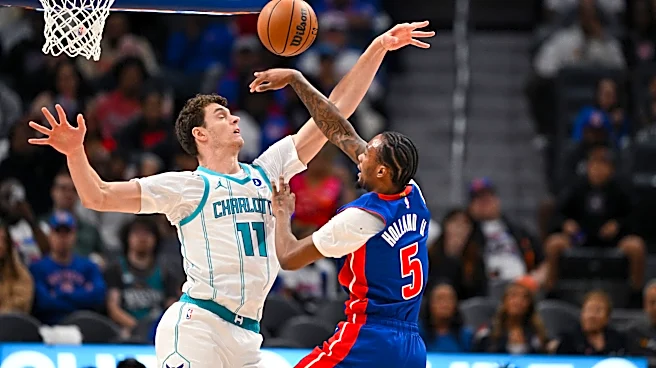
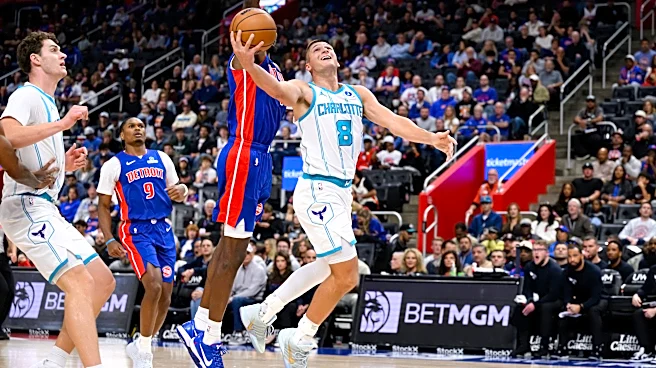
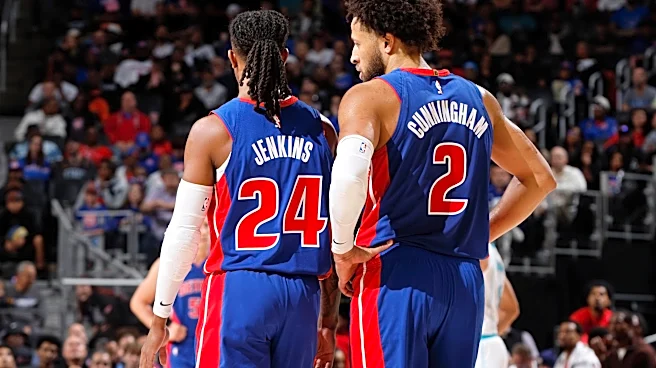
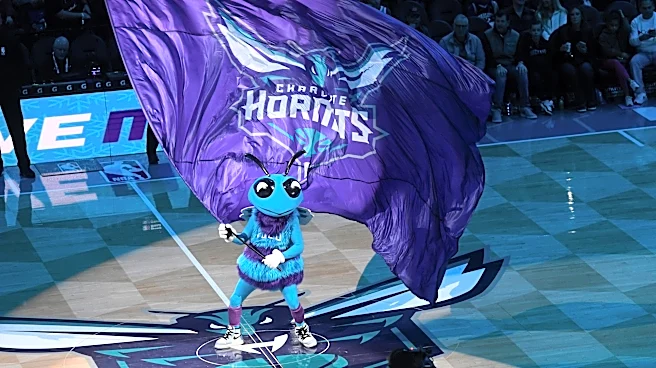
In a recent Detroit Pistons victory over the Charlotte Hornets, Ausar Thompson took on a significant playmaking role, recording eight assists. This marked a rare occasion where Cade Cunningham did not lead the team in assists, a development welcomed by
the Pistons as they seek to reduce Cunningham's offensive burden. Thompson effectively attacked defensive spaces, drawing in defenders and creating opportunities for teammates, including a crucial late-game assist to Cunningham for a three-pointer. His ability to initiate offense and bring the ball up the court also allowed Cunningham to conserve energy, contributing to his freshness in the fourth quarter. While Thompson's on-ball creation is still developing, his improved passing and court vision are making a tangible difference in the team's offensive flow.
Why It's Important?
This shift in offensive responsibility is crucial for the Detroit Pistons, as it addresses the long-standing issue of over-reliance on Cade Cunningham. By having another player, particularly Ausar Thompson, capable of creating offense and distributing the ball, the Pistons can diversify their attack and make it less predictable. This development could lead to more efficient offensive sets and better scoring opportunities for the entire team. For Cunningham, a reduced playmaking load could allow him to focus more on scoring and off-ball movement, potentially increasing his efficiency and reducing his risk of injury due to excessive minutes and usage. This also highlights Thompson's growth as a player, demonstrating his potential to be a more well-rounded contributor beyond his defensive prowess.
What's Next?
The Pistons will likely continue to encourage Ausar Thompson to develop his playmaking and on-ball creation skills. This could involve more opportunities for him to handle the ball and initiate offense in future games. The coaching staff will be looking for consistency in his assist numbers and decision-making, while also working to minimize turnovers. If Thompson can maintain or improve his current assist average of five per game, it will significantly benefit the team's offensive structure. This development could also influence future roster decisions, as having multiple ball-handlers and creators reduces the pressure to acquire another primary playmaker. The team will monitor how this dynamic evolves and its impact on Cade Cunningham's overall performance and workload.
Beyond the Headlines
The emergence of Ausar Thompson as a secondary playmaker for the Pistons could signal a broader strategic shift in how the team constructs its offense. Moving away from a singular primary ball-handler model can create a more resilient and adaptable offensive system, less susceptible to defensive schemes designed to neutralize one player. This also speaks to the modern NBA trend of positionless basketball, where players are expected to contribute in multiple facets of the game. For Thompson, this expanded role could accelerate his development into a more complete player, increasing his value to the franchise. Long-term, a more balanced offensive attack could foster better team chemistry and provide more avenues for individual player growth, moving the Pistons closer to competitive relevance.